Visit the Bookshop


Wednesday, April 23, 2014

Novena in honour of Saint George


Pray the following prayers for nine consecutive days:

PREPARATORY PRAYER

Almighty and eternal God!
With lively faith
and reverently worshipping
Thy divine Majesty,
I prostrate myself before Thee
and invoke with filial trust
Thy supreme bounty and mercy.
Illumine the darkness of my intellect
with a ray of Thy heavenly light
and inflame my heart
with the fire of Thy Divine love,
that I may contemplate
the great virtues and merits
of the Saint in whose honour
I make this novena,
and following his example imitate,
like him,
the life of Thy Divine Son.

Moreover, I beseech Thee to grant graciously,
through the merits and intercession
of this powerful Helper,
the petition which through him
I humbly place before Thee,
devoutly saving,
"Thy will be done on earth as it is in heaven."
Vouchsafe graciously to hear it,
if it redounds to Thy greater glory
and to the salvation of my soul.

Amen.

PRAYER IN HONOR OF SAINT GEORGE

O GOD, who didst grant to Saint George
strength and constancy in the various torments
which he sustained for our holy faith;
we beseech Thee to preserve,
through his intercession,
our faith from wavering and doubt,
so that we may serve Thee
with a sincere heart faithfully unto death.
Through Christ our Lord.

Amen.

INVOCATION OF SAINT GEORGE

Faithful servant of God
and invincible martyr, Saint George;
favoured by God with the gift of faith,
and inflamed with an ardent love of Christ,
thou didst fight valiantly
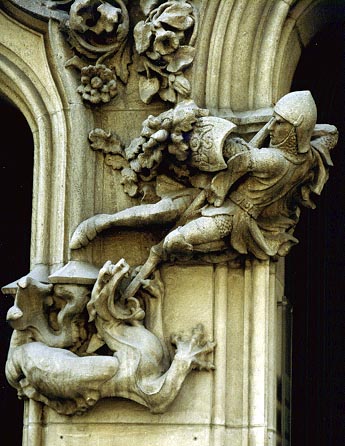
against the dragon of pride,
falsehood, and deceit.
Neither pain nor torture,
sword nor death could part thee
from the love of Christ.
I fervently implore thee
for the sake of this love
to help me by thy intercession
to overcome the temptations that surround me,
and to bear bravely
the trials that oppress me,
so that I may patiently carry the cross
which is placed upon me;
and let neither distress nor difficulties
separate me from the love of Our Lord Jesus Christ.
Valiant champion of the Faith,
assist me in the combat against evil,
that I may win the crown promised to them
that persevere unto the end.

PRAYER

My Lord and my God!
I offer up to Thee
my petition in union
with the bitter passion
and death of Jesus Christ, Thy Son,
together with the merits
of His immaculate and blessed Mother,
Mary ever virgin,
and of all the saints,
particularly with those of the holy Helper
in whose honour I make this novena.

Look down upon me,
merciful Lord!
Grant me Thy grace and Thy love,
and graciously hear my prayer.

Amen.


Tuesday, April 15, 2014

A CRY FOR RELIEF in 1600, Part the Second

by Squire William Blundell

6.

In time to come, as heretofore,
Most certainlye shee shall prevayle
'Gainst all the force and sleightie wyles,
Whearwith hellgates may her assayle;
Whoe shoote against this brazen valle
With their fond boultes themselves will gaule.

7.

Themselves to gaule they vil be sure
Whoe stryve to ruinate thy howse,
And to withdrawe thy children deare
From saufte lappe of thy dearest spouse,
Thy children whom, with streames of bloode,
Thou bought, sweet Lorde, upon the Roode.

8.

Upon the Rood thou bought our soules
With pryce more worthe then all thou bought,
Yett doth the fëëde [fiend] our foes so biynde
Both soules and pryce they sett at nought;
They reaken not anoughe their ill
Except with theirs our soules they spill.

9.

Our soules to spille they think full soone,
Or els our bodies to inthralle ;
Or, at the-least, to wantful state,
Through hard pursuits, to bring us all;
Come quicklie, therefore, Lord Jesus,
And judge this cause twixt them and us.

10.

Geeve judgment, Lord, twixt them and _us,
The ballance yett let pittie houlde
Let mercie,measure their offence, , _ i
And grace reduce them to thy foul de,-
That wee, all children of thy spouse,
May live as brethren in thy house.


Monday, April 14, 2014

A CRY FOR RELIEF in 1600

by William Blundell of Crosby Hall


I.

We Catholicks tormented sore
With heresies fowl railinge tonge,
With prisons, tortures, loss of geodes,
Of lande, yea lyves, even thieves amonge
Do crave with harte surcharged with grieffe
Of thee, sweet Jesu, some relieffe.

2.

We crave relieffe in this distresse,
We seeke some ease of this annoye,
Yett are wee well content with all,
So thee in end wee may enjoye ;
Ourselves to thee wee do resygne,
Relieve us, Lord, our cause is thyne.

3.

Our cause is thyne, and thyne are wee,
Who from thy trueth refuse to slyde
Our faithe thy trueth, true faith the cause
For which these garboyles wee abyde,
True faith, I say, as plaine appears
To all whoe shutt not eyes and ears.

4.

To all whoe shutt not eyes and ears
'Gainst fathers, scriptures, Church and thee,
Whoe built thy Church as Doctors all
With scriptures playnlie doe agree,
Not soone to falle upon the sande,
But on a Rocke stille sure to stande.

5.

Still sure to stande, yea, on a hille,
For all her friends and foes to see,
Her friends to foster and defend,
Her foes to vanquish gloriousíie,
From age to age this hath shee done,
Thus shall shee do in time to come.


Prayer for the Conversion of England


"With full confidence we call upon these (Our Lady, St Peter and St George) to be our pleaders before the throne of God that receiving the joy of ancient days, it may fill you with all joy and peace in believing" Apostolic Letter of Pope Leo XIII to the English People, 14 April 1895."

The following prayer was also indulgenced on the same occasion.

O Blessed Virgin Mary, Mother of God, and our own most gentle Queen and Mother, look down in mercy upon England, thy Dowry, and upon us all who greatly hope and trust in thee. Through thee it was that Jesus our Saviour and our Hope was given unto the world; and he hath given thee to us that we might hope still more. Plead for us thy children, whom thou didst receive and accept at the foot of the Cross, O sorrowful Mother. Intercede for our separated English brethren, that they may be united with us in the one true Fold. Pray for us all, dear Mother, that by faith fruitful in good works, we may all deserve to see and praise God together with thee in our heavenly home. Amen.

Ad sanctissimom Virginem pro Anglis fratribus precatio. O beata Virgo Maria, Mater Dei, Regina nostra et Mater dulcissima bcnigna oculos tuos convcrto ad Angliam, quae “Dos” tua vocatur; a convorto ad nos, qui magna in te fiducia confidimus. Per te datus est Christus Salvator mundi, in quo spes nostra consisterct; ab Ipso autem tu data es nobis, per quam spes eadem augeretur. Eia igitur, ora pro nobis, quos tibi apud crucem Domini excepisti filios, o perdolens Mater: intercede pro fratribus dissidentibus, ut nobiscum in unico vero Ovili adjungantur summo Pastori, Vicario in terris Filii tui. Pro nobis omnibus depreccare, o Mater piissima, ut per fidem, bonis operibus fecundam, mercamur tecum omnes contemplari Deum in coelesti patria et collaudare per secula. Amen.

Pope Leo XIII (300 days indulgence, plenary indulgence once a day for Catholics who pray the prayer each day, with the usual conditions of sacramental Confession,Communion at Mass and prayer for the intentions of the Pope).

Ignatius Spencer, Passionist, Crusader of Prayer for England

Saturday, March 29, 2014

Blessed WILLIAM HART to his Protestant mother II

NO COMPARISON

Another biography

"ALAS, sweet Mother, why do you weep ? Why do you lament ? Why do you take so heavily my honourable death ? Know you not that we are born once to die ; and that always in this life we may not live? Know you not how vain, bow bickers how inconstant, how miserable this life of ours is ? Do you not consider my calling, my estate, my profession ? do you not remember that 1 am going to a place of all pleasure and felicity ? Why, then, do you weep ? why do you mourn ? why do you cry out ? But perhaps you will say I weep not so much for your death as I do for your being hanged, drawn, quartered. My sweetest mother, it is the favourablest, honorablest, happiest death that ever could have chanced unto me. I die, not for bravery, but for verity : I die, not for treason but for religion ; I die, not for any ill demeanour or offense committed, but only for my faith, for my conscience, for my parenthood, for my blessed Saviour Jesus Christ : and to tell you truth if I had ten thousand lives I am bound to lose them all rather than to break my faith and offend my God. We are not made to eat, drink, sleep, but to serve God,and to the cost of our lives" 

 For I reckon that the sufferings of this time are not worthy to be compared with the glory to come. Romans viii. 18.

Friday, March 28, 2014

Blessed WILLIAM HART to his Protestant Mother I

FILIAL PIETY

Biography

"SEEING that by the severity of the laws, by the wickedness of the times, and by God's holy ordinance and appointment! my days in this life are cut off: of duty and conscience I am bound (being far from you in body, but in spirit very near you) not only to crave your daily blessing, but also to write these few words unto you. You have been a most loving, natural, and careful mother unto me : you have supered great pains in my birth and bringing up; you have toiled and turmoiled to feed and sustain me your first and eldest child; and therefore for these and all other your motherly cherishings I give you, as it becometh me to do , most humble and hearty thanks ; wishing that it lay in me to show myself as loving, natural, and dutiful a son as you have showed yourself a most tender and careful mother. I had meant this spring to have seen you if God had granted me health and liberty, but now never shall I see you or any of yours in this life again; trusting yet in Heaven to meet you, to see you, and to live everlastingly with you" 

Forget not the groanings of thy mother. Ecclus vii. 29

Thursday, March 27, 2014

Saint MARGARET CLITHEROE, laywoman, 1586

A VALIANT WOMAN

WIFE of John Clitheroe, sometime Sheriff of York she was thirty years of age and already married when a growing dissatisfaction with the Protestant religion led her, after due inquiry, to embrace the Faith. During the following twelve years of her Catholic life her house was a refuge for priests, whom she received at her own peril and unknown to her husband . With this help she brought up her children in the faith and her eldest son for the priesthood. She managed to hear Mass almost daily, communicated twice a week, and fasted rigorously. For her persistent recusancy she was repeatedly cast into prison, even for two years together and more, but her sufferings only increased her fervour. " Were it not" she said, " for her husband and child she would rather stay there always, apart from the world with God" Still, when at liberty she was most attentive to the care of her house, and with her servant took part herself in the humblest menial work. She was exposed to much ill-usage even from Catholics, who misjudged and censured her, but her constancy and patience never failed. Her husband said she had only two faults, fasting too much and refusing to go to Church.


Her children rose up and called her blessed :her husband and he praised her. Many daughters have gathered together riches : thou hast surpassed them all.    Proverbs xxxi.28-29


Enhanced by Zemanta

Wednesday, March 26, 2014

Saint MARGARET CLITHEROE, laywoman, 1586

ON March 10 1586, when she had been at liberty some eighteen months-, her husband was summoned before the Council at York, and in his absence his house was searched. The priest there in hiding escaped, but Margaret and her children were taken prisoners. Enraged at their failure the searchers stripped a Flemish boy of twelve years, staying in the house, and threatened him with rods till he showed them the priest's chamber, and where the Church stuff was kept. At her trial, lest her children might be forced by evidence to be guilty of her blood, she refused to plead, giving as a reason however that she had committed no offence. Two chalices were therefore produced and religious pictures, and two ruffians clad themselves in the priestly vestments and began playing the fool, pulling and hauling themselves before the judges, while one, holding up a piece of bread, said to the martyr, " Behold the God in whom thou believest." At her second examination she again refused to plead, saying that there was no evidence against her save that of children, whom you can make say anything for a rod or an apple. The judge urged her to demand a jury, but in vain, and on her refusal she was sentenced to be pressed to death. "

Herod questioned Him in many words, but Jesus anwered him nothing. Luke xxiii. 9


Tuesday, March 25, 2014

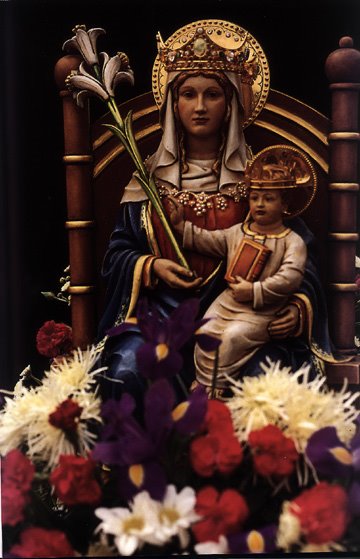
Feast of Our Lady of Walsingham


A Lament for Our Lady's Shrine at Walsingham


"In the wrackes of WalsingamWhom should I chuse
But the Queene of Walsingam
To be guide to my muse?

Then thou Prince of Walsingam
Grant me to frame
Bitter plaintes to rewe thy wronge
Bitter wo for thy name.

Bitter was it oh to see
The seely sheepe
Murdered by the raveninge wolves
While the sheephards did sleep.

Bitter was it oh to vewe
The sacred vyne
While the gardiners plaied all close
Rooted up by the swine.

Bitter, bitter oh to behould
The grasse to growe
Where the walls of Walsingam
So stately did shewe.

Such were the works of Walsingam
While shee did stand
Such are the wrackes as now do shewe
Of that so holy land.

Levell levell with the ground
The towres doe lye
Which with their golden, glitteringe tops
Pearsed once to the skye.

Where weare gates no gates are nowe,
The waies unknowen,
Where the press of peares did passe
While her fame far was blowen.

Oules do scrike where the sweetest himnes
Lately weer songe,
Toades and serpents hold their dennes
Wher the palmers did thronge.

Weepe, weepe O Walsingam,
Whose dayes are nightes,
Blessings turned to blasphemies,
Holy deeds to dispites.

Sinne is wher our Ladie sate,
Heaven turned is to hell,
Satham sittes wher our Lord did swaye,
Walsingam, oh farewell ! "

Traditionally ascribed to St Philip Howard.

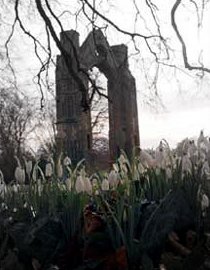
The restored Catholic Shrine of Walsingham

The Feast is traditionally celebrated on the 25th March. The Feast was restored to the modern Catholic calendar in England in 2000, displacing the Feast of Our Lady of Ransom.
Enhanced by Zemanta

+ Saint MARGARET CLITHEROE, laywoman, 1586

THE WINE PRESS ALONE

Biography

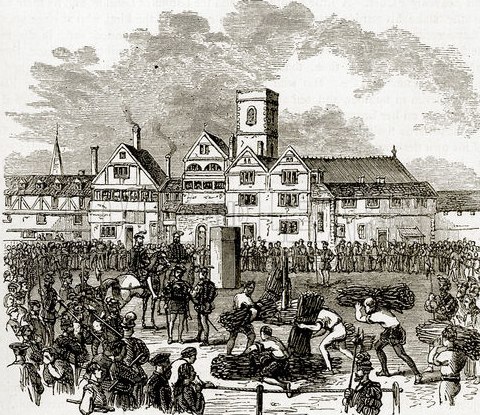
FORBIDDEN to see husband or child, pestered by successive ministers, and herself charged with gross immorality, Margaret learnt at length, on March 24, that she was to die on the morrow, that year Good Friday. She had prepared herself for this by fasting and prayers but she begged for a maid to be with her during the night! for " though death is my comfort,'' she " the flesh is frail," but as no one could be admitted the keeper's wife sat with her for a while. The first hours of the night Margaret passed on her knees in prayer, clothed in a linen habit made by herself for her passion. At three she rose and laid herself flat on the stones for a quarter of an hour, then rested on her bed. At eight the Sheriffs called, and with them she walked barefoot, going along through the crowd to the Tolbooth. There turning from the ministers she knelt and prayed by herself. Forced to undress, she laid herself on the ground clothed only in the linen habit, her face covered with a handkerchief, her hands outstretched and bound as if on a cross. The weighted door was laid on her ; at the first crushing pain she cried, "Jesu, Mercy,'' and after a quarter of an hour passed to her God.

The Ouse Bridge on which the Tolbooth


I have trodden the wine-press alone. Isaiah lxiii.3

Wednesday, March 05, 2014

Blessed JAMES BIRD Layman, 1593

FILIAL REVERENCE

Biography
On the right hand side


BORN at Winchester of a gentleman's family and brought up a Protestant, he became a Catholic and went to study at Rheims. On his return he was apprehended and charged with being reconciled to the Roman Church, and maintaining the Pope under Christ to be the Head of the Church. Brought to the bar he acknowledged the indictment and received sentence of death as for high treason, though both life and liberty were offered him if he would but once go to the Protestant Church. When his father solicited him to save his life by complying, he modestly answered that, as he had always been obedient to him, so he would obey him now could he do so without offending God-After a long imprisonment he was hanged and quartered at Winchester, March 25, 1593. He suffered with wonderful constancy and cheerfulness, being but nineteen years old. His head was set upon a pole upon one of the gates of the city. His father one day passing by thought that the head bowing down made him a reverence, and cried out: "Oh, Jemmy my son, ever obedient in life, even when dead thou payest reverence to thy father. How far from thy heart was all treason or other wickedness."

Honour thy father in work and word, and all patience, that a blessing may come upon thee from him. ECCLES. iii.9, 10.

Tuesday, March 04, 2014

Blessed NICHOLAS HORNER Layman, 1590

THE VESTMENTS OF SALVATION

Biography

A NATIVE of York, a tailor by trade and a zealous Catholic, he endeavoured, according to his ability, to persuade others to embrace the faith. Having come up to London to be cured of a wound in his leg, he was committed to Newgate for harbouring priests. There the heavy fetter on his leg and the deprivation of all medical aid rendered an amputation necessary. During the operation he sat upon a form, unbound, in silence, a priest the while (Hewett, who was afterwards himself a Martyr) holding his head, and he was further comforted by such a vivid apprehension of Christ bearing His Cross that he seemed to see it on His shoulders. Freed at the earnest suit of his friends, he worked at his trade at some lodgings at Smithfield. Again cast into Bridewell for harbouring priests, he was hung up by the wrists till he nearly died. At length condemned solely for making a jerkin for a priest, he was hanged in front of his lodging in Smithfield, March 3,1590.


On the night before his execution, finding himself overwhelmed with anguish, he betook himself to prayer, and perceived a bright crown of glory hanging over his head. Assured of its reality, he said : " O Lord, Thy will be mine," and died with extraordinary signs of joy.

" He hath clothed me with the garments of salvation."—ISA. lxi. 10.


Monday, February 24, 2014

English Recusants

The first statute in which the term "Popish Recusants" is used is 35 Eliz. c. 2, "An Act for restraining Popish Recusants to some certain place of abode", which was passed in 1593. The statute defines a recusant as one "Convicted for not repairing to some Church, Chapel, or usual place of Common Prayer to hear Divine Sevice there, but forbearing the same contrary to the tenor of the laws and statutes heretofore made and provided in that behalf". The Recusancy Acts are: 1 Eliz. c. 2, 23 Eliz. c. 1, 29 Eliz. c. 6, 35 Eliz. c. 2, 3 Jac. I. c. 5, 7 Jac. I. c. 6, and 3 Car. I. c. 2. But several statutes declare that other offenses shall be deemed acts of recusancy, and that those convicted of them shall be deemed "popish recusants convict". 

 As time went on there were other recusants who were not Catholics, but who for one reason or another refrained from attending the Church of England services. This fact must be remembered in dealing with the Recusancy lists, though, of course, far the larger number of recusants were Catholics. The number of recusants was very great, as may be seen by one instance adduced by J.S. Hansom in his preface to the list of convicted recusants in the reign of Charles II, where on one day (24 Feb., 1690) the names of 1755 recusants were presented in the single town of Thirsk. The recusancy laws were in force from the reign of Elizabeth to that of George III, though they were not always put into execution with equal vigour. Lists of recusants for various counties exist in the Pipe Rolls preserved in the Record Office, Longon. Others are to be found in the British Museum, Bodleian Library, and in various local archives. Source

Wednesday, February 12, 2014

+ Blessed GEORGE HAYDOCK, Priest, 1584


A ROYAL HYPOCRITE

ARRESTED as a priest in February 1582 in St. Paul's Churchyard, he was confined in the Tower, where he was robbed of all his money, and suffered much from the hardships of his imprisonment, and from a lingering disease that he had contracted in Italy. On February 7, 1583, he was sentenced to death for having been 'made priest by the Pope's authority beyond the seas. He attributed this happy event to the prayers of St. Dorothy, Virgin and Martyr, whose day it was, and he marked it in the Calendar of his Breviary, which he left to Dr. Creagh, Archbishop of Armagh, then a prisoner in the Tower (see also Last Years). But to his sorrow he heard that the Queen had changed her mind, and that he was not to suffer. His Confessor, however, a man of great experience, encouraged him by the assurance that these rumours were industriously spread abroad only to represent the Queen as averse from these cruelties, and to remove any odium from her, as if they were extorted from her against her inclinations. The falseness of the Queen's reported leniency was proved by the event. Father Haydock, without a sign of any pardon, was hung at Tyburn, and the whole butchery performed February 12, 1584.

"They spoke indeed peacefully to me : and speaking in anger of the earth they devised guilt."—Ps. xxxiv. 20.

Tuesday, February 11, 2014

Blessed GEORGE HAYDOCK Priest, 1584

SORROW TURNED TO JOY

Biography

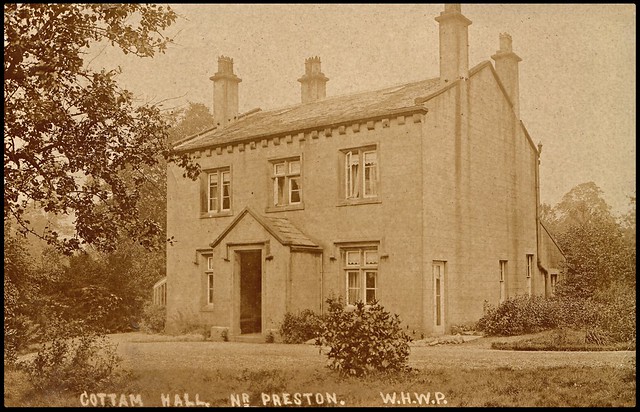
HE was the son of Verran Haydock, the representative of an ancient Catholic family of Cottam Hall, Lancashire; his mother, a Westby of Westby, York.


When on her deathbed, to console her sorrowing husband, she pointed, with the infant George in her arms, to the motto embroidered at the foot of the bed, " Tristitia vestra in gaudium vertetur." But the joy prophesied was not to be of this world. The widowed husband, seeing how persecution was ravaging the Church in England, to offer some reparation made over his property to his son William, and went over to Douay with the two others, Richard and George, all three to be trained for the priesthood. The father became procurator of the Douay College in England, and filled the office with great success. Richard after varied missionary work died in Rome, and George returned to England as a priest in February 1581, and was betrayed on arriving by an old tenant of his father's who had apostatised. His aged father on the previous All Souls' Eve, when about to say the accustomed midnight Mass, seemed to see his son's severed head above the altar, and to hear the words," Tristitia vestra, &c," and, swooning away, gave back his soul to God to find his sorrow turned to joy.

"Your sorrow shall be turned into joy."— JOHN xvi. 20. This was also the Haydock family motto.

See also A ROYAL HYPOCRITE


Saturday, January 11, 2014

Sir THOMAS PERCY, 1536

THE PILGRIMAGE OF GRACE (2)

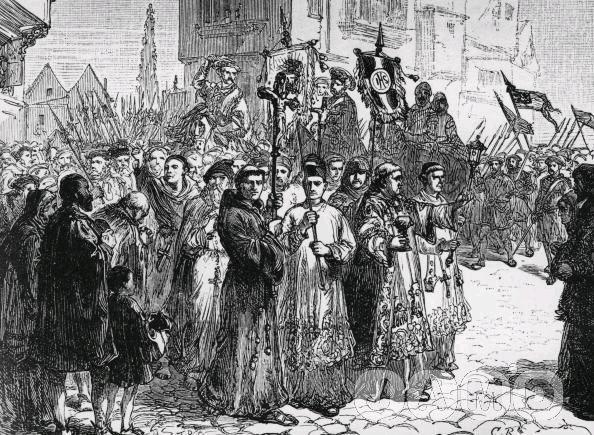
IN October 1536, from the Scottish Borders to the Humber, the good staunch Catholics of the North flocked to the banners of the Pilgrimage of Grace. Second in command under Aske, leading the vanguard of six thousand men under the banner of St. Cuthbert, rode Sir Thomas Percy, brother of the Earl of Northumberland. They marched, some forty thousand strong, into Yorkshire, and Henry quailed before the pilgrims, though his forces were large. By deceitfully promising the redress of their grievances he cajoled them into dispersing and returning home. But in the next spring, on their re-assembling, he despatched more numerous troops to the Duke of Norfolk (The Third Duke, Thomas), his lieutenant, who succeeded in securing their leaders. Sir Thomas, though he surrendered, was taken to Westminster, tried, and hanged with, amongst other supposed leaders, the Abbot of Jervaulx and the Dominican Friar John Pickering of York Priory. They suffered "because, as false traitors, they conspired to deprive the King of his royal dignity, viz. of being on earth the Supreme Head of the Church in England." Thus, though not among the Beatified, they died for the faith.

"For whom do you stay? I will not obey the commandment of the King, but the commandment of God which was given by Moses." —2 MACH. vii. 30.

See
PILGRIMAGE OF GRACE (1)
CLEANSING THE TEMPLE
THE ABOMINATION OF DESOLATION

Friday, January 10, 2014

Sir ROBERT ASKE

THE PILGRIMAGE OF GRACE (I)


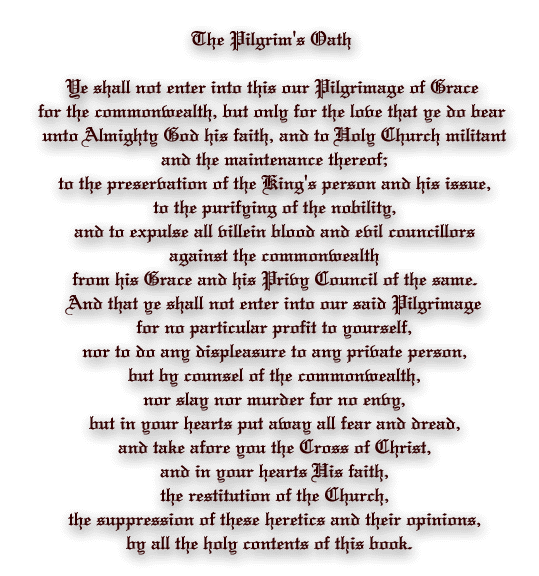
HE was of an old Yorkshire family, and was the chief leader in the Pilgrimage of Grace, as he had been in the Lincolnshire rising. The following is his proclamation, October 1536: "Simple and evil-disposed persons being of the King's Council have incensed his Grace with many inductions contrary to the faith of God, the honour of the King, and the weal of the Realm. They intend to destroy the Church in England and her ministers ; they have robbed and spoiled, and further they intend to rob and spoil, the whole body of this realm. We have now taken this Pilgrimage for the preservation of Christ's Church, of the Realm, of the King : to the intent of making petition to the King for the reformation of that which is amiss, and for the punishment of heretics and subverters of the laws; and neither for money, malice, nor displeasure of any person, but such as be unworthy to remain about the King. Come with us, Lords, Knights, Masters, Kinsmen, and friends ! If ye fight against us and defeat, ye will but put both us and you into bondage for ever; if we overcome you, ye shall be at your will. We will fight and die against all who shall be about to stop us in this pilgrimage, and God shall judge between us."

"What wouldest thou ask of us ? We are ready to die rather than transgress the laws of God received from our fathers." 2 MACH.vii. 2.

PILGRIMAGE OF GRACE (2)
CLEANSING THE TEMPLE
THE ABOMINATION OF DESOLATION


Composed by Sir Robert Aske
Enhanced by Zemanta

Tuesday, January 07, 2014

+ Venerable EDWARD WATERSON, Priest, 1593

BALAAM'S ASS

Biography

HE was born in London and brought up in the Protestant religion. In company with certain merchants he traveled to Turkey to see the East, and there a rich Turk, taking a fancy to him, offered him his daughter in marriage if he would renounce Christianity. Waterson, however, refused the proposal with horror, and taking Rome on his way homewards was instructed and reconciled to the Church. He was then admitted as a student at Rheims, and though he had but little learning, his zeal mastered all difficulties, and he was ordained priest in Mid-Lent 1592 and sent to England. Shortly after his arrival he was apprehended and condemned on account of his priesthood. Catholic eye-witnesses relate that, as he was being drawn to his execution, the hurdle suddenly stood still, and the officers in vain flogged the horses to move it. Fresh animals were secured, but they broke the traces, and the hurdle remained fixed. Waterson had therefore to be led on foot to the gallows; there the ladder shook violently of itself till the martyr by the sign of the Cross made it still, and ascending won his crown.

" And when the ass saw the angel standing she fell under the feet of the rider, who, being angry, beat her sides more vehemently with a staff."—NUM. xxii. 27.

Monday, January 06, 2014

Father JOHN GENINGS, O.S.F., died 1660

THE PRODIGAL'S RETURN

THE news of his brother's martyrdom in December 1591 caused John Genings joy rather than sorrow, since he deemed it an escape from all Edmund's arguments and persuasions in favour of the Catholic religion, being himself strongly against the faith. But about ten days after his brother's execution, having spent all that day in sport and jollity, being weary with play, he returned home. There his heart felt heavy, and he began to weigh how idly he had passed the day. His brother's death came before him, and how he had abandoned all worldly pleasures, and for the sake of religion alone endured intolerable torments. Then the contrast of their two lives —the one mortified, fearing sin, the other spent in self-indulgence and in every kind of vice. Struck with remorse, he wept bitterly and besought God to show him the truth. In an instant joy filled his heart with a tender reverence for the Blessed Virgin and the Saints, of whom he had scarcely heard. He longed now to be of his brother's faith, and gloried in his eternal happiness. He left England secretly, was made priest at Douay, became a Franciscan, and the first Provincial of the renewed English Province.

" I will arise and go to my Father, and say to him, Father, I have sinned against heaven and before thee."—LUKE XV. 8. 18

Sunday, January 05, 2014

ABBOT FECKENHAM OSB, 1585

DEFILING THE SANCTUARIES (2)

Biography

SPEECH in the House of Lords : " My good Lords, when in Queen Mary's days your honour do know right well how the people of this realm did live in order and under law. There was no spoiling of Churches, pulling down of Altars, and most blasphemous treading down of The Sacrament under their feet, and hanging up the knave of clubs in the place thereof. There was no knocking or cutting of the face and legs of the Crucifix, and of the image of Christ. There was no open flesh-eating or shambles-keeping in the Lent and days prohibited. The subjects of this realm, and especially such as were of the honourable council in Queen Mary's days, knew the way to Church or Chapel, and to begin their daily work by calling for help and grace by humble prayer. But now since the coming of our most sovereign and dear lady Queen Elizabeth, by the only preachers and scaffold-players of this new religion all things are changed and turned upside down. Obedience is gone, humility and meekness clean abolished, virtuous, chaste, and straight living abandoned."

" Her priests have despised my law and have defiled my sanctuaries. Her princes in the midst of her are like wolves ravening the prey, to shed blood and destroy souls."—EZEK. xxii. 26, 27.


Popular Posts