

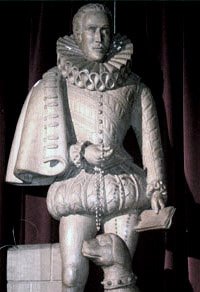
St ROBERT SOUTHWELL SJ, 1595
WILLING SACRIFICES

He thus describes the condition of his fellow Catholics, priests and laity : “ As yet we are alive and well, being unworthy, it seems, of prisons. We have oftener sent than received letters from your parts, though they are not sent without difficulty, and some we know have been lost. The condition of Catholic recusants here is the same as usual, deplorable and full of fears and dangers, more especially since our adversaries have looked for wars. As many of ours as are in chains rejoice and are comforted in their prisons; and they that are at liberty set not their hearts upon it nor expect it to be of long continuance. All, by the great goodness and mercy of God, arm themselves to sufifer anything that can come, how hard soever it may be* as it shall please our Lord, for whose greater glory and the Salvation of their souls they are more concerned than for any temporal losses. A little while ago they apprehended two priests, who have suffered such cruel usages in the prison of Bridewell as can scarce be believed. What was given them to eat was so little in quantity, and withal most filthy and nauseous.”
“Then said I, Behold I come to do Thy will, O my God.”—Ps. xxxix. 7, 9.

He thus describes the condition of his fellow Catholics, priests and laity : “ As yet we are alive and well, being unworthy, it seems, of prisons. We have oftener sent than received letters from your parts, though they are not sent without difficulty, and some we know have been lost. The condition of Catholic recusants here is the same as usual, deplorable and full of fears and dangers, more especially since our adversaries have looked for wars. As many of ours as are in chains rejoice and are comforted in their prisons; and they that are at liberty set not their hearts upon it nor expect it to be of long continuance. All, by the great goodness and mercy of God, arm themselves to sufifer anything that can come, how hard soever it may be* as it shall please our Lord, for whose greater glory and the Salvation of their souls they are more concerned than for any temporal losses. A little while ago they apprehended two priests, who have suffered such cruel usages in the prison of Bridewell as can scarce be believed. What was given them to eat was so little in quantity, and withal most filthy and nauseous.”
“Then said I, Behold I come to do Thy will, O my God.”—Ps. xxxix. 7, 9.



 Posts
Posts


