Visit the Bookshop


Showing posts with label 1642. Show all posts

Friday, December 12, 2014

+ Blessed THOMAS HOLLAND, Jesuit, 1642

Born in Lancashire, he was educated at St. Omer’s, where he was repeatedly, on account of his piety, elected prefect of the Sodality of Our Blessed Lady. Thence he was sent to Valla­dolid, and was chosen to make a Latin oration at Madrid before Charles Prince of Wales (Charles I), on occasion of a marriage then pro- posed with the Infanta Maria. Returning to Flanders, he entered the Society of Jesus, and was sent on the English Mission to London, 1634. He was then in very bad health, and his illness was increased by the close confinement imposed upon him by the unremitting house- searching of the pursuivants. Yet, notwith- standing the vigilance of his enemies and his own infirmities, through the various disguises he adopted, so as to be unrecognisable even by his friends, his perfect knowledge of French, Fle­mish, and Spanish languages enabling him to assume any character, he reaped auring two year's labour a rich harvest of souls. At length in 1642 he was apprehended on suspicion and sentenced. In prison his holy counsel and deep spiritual wisdom sanctified the throngs, English and forejgü, who came for his last words. He said Mass and administered the Sacraments up to the day of his execution at Tyburn, Decem­ber 12, 1642.

“ I became all things to all men that I might save all.”—1 Cor. ix. 22.

Monday, October 13, 2014

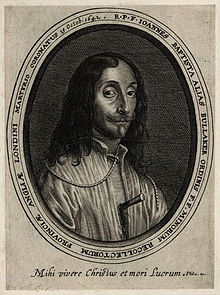
Venerable THOMAS BULLAKER, Franciscan, 1642

THE LAST GLORIA

Biography

"IN the year 1642," he writes, "on September 11, which fell on a Sunday, it pleased the Most High and Mighty God to put an end to my sufferings, and give me, His most unworthy servant, the consolation and hope that what I have so long desired and prayed for would shortly come to pass. Blessed be His Holy Name for all eternity. After having finished the Divine office on the morning of this Day, in order that I might better offer the unbloody Sacrifice of the Body and Blood of our Lord Jesus Christ to God, I recollected myself as was fitting and as best I could, and 1 prayed His Divine Majesty of His Infinite Goodness to grant me for love of Him to exchange life, and, knowing my own unworthiness, of His overflowing and Infinite Goodness to make up for my poverty. After having prayed thus with the greatest fervour that God granted me, I rose, and having washed my hands and said the Litany of the Blessed Virgin as usual, I began the Mass. But lo, as I was intoning the 'Gloria in Excelsis,' the apostate pursuivant Wadsworth came into the room, laid hands on me at the Altar, and took me to the Sheriff."

"Father, glorify Thy Name. A voice came from Heaven, I have glorified it and will glorify it again."—JOHN xii. 28.

Gloria in excelsis deo,
et in terra pax hominibus bonae voluntatis
Laudamus te.
Benedicimus te.
Adoramus te.
Glorificamus te.
Gratias agimus tibi propter magnam gloriam tuam.
Domine Deus, Rex caelestis, Deus Pater omnipotens.
Domine fili unigenite, Jesu Christe.
Domine Deus, Agnus Dei, Filius patris.
Qui tollis peccata mundi, miserere nobis.
Qui tollis peccata mundi suscipe deprecationem nostram.
Qui sedes ad dexteram patris miserere nobis.
Quoniam tu solus sanctus.
Tu solus Dominus.
Tu solus Altissimus, Jesu Christe.
Cum Sancto Spiritu in gloria Dei Patris. Amen.
Glory to God in the highest,
and on earth peace to people of good will.
We praise you.
We bless you.
We adore you.
We glorify you.
We give thanks to you for your great glory.
Lord God, Heavenly King, God Almighty Father.
Lord Only-begotten Son, Jesus Christ.
Lord God, Lamb of God, Son of the Father.
You who take away the sins of the world have mercy on us.
You who take away the sins of the world hear our prayer.
You who sit at the Father's right hand, have mercy on us.
For you alone are holy.
You alone, Lord.
You alone the Most High, Jesus Christ.
With the Holy Spirit in the glory of God the Father. Amen.

Sunday, October 12, 2014

+ Venerable THOMAS BULLAKER, OSF, 1642

FIRE FROM HEAVEN

Biography

Son of a well-known Catholic physician at Chichester, he was sent to St. Omer's, and thence entered the Franciscan Order in Spain. He first offered himself for the Mission in the West Indies, but England being pointed out as a richer field for his labours, thither he went. On landing at Plymouth he was arrested and imprisoned, and his sufferings then endured affected his health for the remainder of his life. As nothing could be proved against him, he was discharged, and for eleven years laboured in the country. The heroic sufferings of Father Ward enkindled in him, however, a holy envy, and he obtained leave to remove to London. He chose that part of the city where he was most in peril, but his hope for martyrdom was constantly deferred. Pursuivants came to his house, but would not take him, though he declared himself a priest. The next day they returned, and, though his Breviary was on the table, they left without arresting him. Deeming himself unworthy of the crown, he re­doubled his prayers and tears, and was arrested on Sunday, September 11, 1642, at the begin­ning of his Mass, and to his great joy was executed at Tyburn, October 12, 1642.

"I am come to cast fire on the earth, and what will I but that it be enkindled ?"—LUKE xii. 49

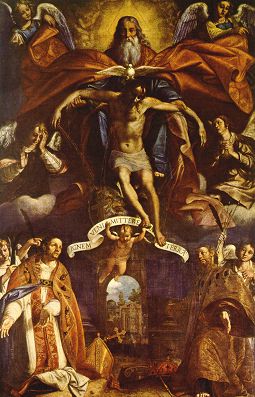
Ignem veni mittere in terram.


The motto over the High Altar of the English and Welsh College in Rome.

Saturday, October 11, 2014

Venerable THOMAS BULLAKER, Franciscan, 1642

THE IMAGE OF CHRIST

Biography

" IF you go on as you have begun, before many years," he said to the Sheriff, " the law will make it treason to believe in Jesus Christ. You must hate Him greatly since you cannot bear to behold the Statue and image which is a memorial of His Passion and our Redemption, and which the most praiseworthy piety of your forefathers erected at great cost." Hereupon those who stood around cried out," Where in the Scripture did Christ order an image of Himself to be made ?" Bullaker replied : " The precise words do not occur, yet the natural law, to which the Divine law is never opposed, approves of the practice. Reason teaches and experience proves that an injury done to a statue is done to Him whose person it represents. To make the thing clearer, if any one insulted, trampled underfoot, or broke to pieces the statue of the King, would you not say that he was guilty of treason ? And if it be so, ask yourselves, I entreat you, how much greater a crime it must be to injure and abuse the statue of Jesus Christ our Saviour, the King of kings, as you have lately done."

" Whom He foreknew, He also predestinated to be made conformable to the image of His Son."—ROM. viii. 29.

Tuesday, August 19, 2014

+ Blessed HUGH GREEN, Priest, 1642

A LAMENTATION FULFILLED

Biography

"AFTER he was cut down he came to his perfect senses," writes Dame Willoughby, " and sat upright. Protestants heard him and took great notice of it; for all the Catholics were pressed away by the unruly multitude except myself, who never left him until his head was severed from his body. Whilst he was thus calling upon Jesus, the butcher did pull a piece of his liver out instead of his heart, then with his knife raked on the body of the blessed martyr, who even then called on Jesus, and his forehead sweat, then it was cold, presently again burned ; his eyes, nose, and mouth ran with with blood and water. His patience was admirable, though his inward groans gave signs of those lamentable torments which for more than half-an-hour he suffered."
Then the people pulled him down by the rope which was about his neck ; then did the butcher cut him open, and turned the flap upon his breast, which the holy man feeling put his hand upon his bowels, and looking on his bloody hand laid it down by his side, and lifting up his right hand crossed himself, saying three times, * Jesu, Jesu, Jesu mercy !' The which, although unworthy, I am a witness of, for my hand was on his forehead, and many

" My eyes have failed with weeping, my bowels are troubled, my liver is poured out upon the earth."—-LAM. ii. 11.

Saturday, August 16, 2014

Blessed HUGH GREEN, Priest, 1642 on the Scaffold

FOUR THINGS MORE

Biography

"THERE be four things more: one God, one faith, one baptism, one Church. That there is one God we all acknowledge, in whom, from whom, and by whom all things remain and have their being. That there is one faith appears by Christ's praying that St. Peter's faith (He said not faiths) should never fail; and He promised to be with it to the end of the world. That there is one baptism : we are all cleansed by the laver of water in the Word. That there is one Church, holy and sanctified : doth not St. Paul say that it is a glorious Church without spot or wrinkle or any such thing? Now the marks of this Church are sanctity, unity, antiquity, universality, which all of us in all points of faith believe. But some will say we are fallen off from this Church of Rome, but in what pope's time, in what prince's reign, or what are the errors, none can discover. No, this holy Church of Christ did never err. By the law I am now to die for being a priest. Judge you, can these new laws overthrow the authority of God's Church ? Nevertheless, I forgive you, and pray God for all."

"That they may be one, as we also are one."—JOHN xvii. 22.

Friday, August 15, 2014

Blessed HUGH GREEN, Priest, 1642 on the Scaffold

THE FOUR LAST THINGS

Biography


"THERE be four principal things which all men ought to remember : death, judgment, Heaven and Hell. Death is a horror to nature, but that which followeth is much more terrible, viz. judgment, if we die not as we ought; and as we dispose ourselves to good or evil in this life, so shall the measure of our punishment or glory succeed. I am here condemned to die for my religion and for being a priest: we know there must be priests, for God, foretelling of the Church by the prophets, saith, 'Thou art a priest for ever after the order of Melchisedech' (Ps. cix.). 'And from the rising of the sun unto the going down thereof, there shall be a clean sacrifice offered in My Name (Mai. i.11). Now'four things are to be considered : a God, a sacrifice, a priest, a man : such am I, and therefore I must die. Wherefore do we receive holy unction and are made priests but to offer sacrifice to God ? But I am condemned for -being ordained by the See of Rome. St. Paul saith, 'the Romans have the Catholic faith' and gives God thanks that their faith and his were one, of which Catholic faith I am."

"In all thy works remember thy last end and thou shalt never sin."—ECCLUS. vii. 40

Thursday, August 14, 2014

Blessed HUGH GREEN, Priest, 1642

ABSOLVED FROM AFAR

BORN in London, and a convert from Cambridge, he was arrested in attempting to leave England, in consequence of King Charles I's banishment of priests, and sentenced after five months' imprisonment. 

Dame Bridgette Willoughby, an eye-witness, says, that "his devotion on his way to death was most edifying. He was taken from the hurdle and kept on the hill at some distance from the scaffold until three poor women were hanged. Two of them had sent him word the night before that they would die in his faith. This comforted him much, for he had done his utmost to speak with them, but failed. They therefore sent again to desire him that when they had made a confession of their sinful lives at the foot of the gallows, on their making the sign he should absolve them. This with great joy iin his heart, and much benefit (as it is hoped) on theirs, was performed. They then turned their faces towards us, and throwing forth their arms cried out to him, ' God be with you, sir,' and so died. But the third woman turned from us towards the press of people, her face or speech never tending towards us."

" The Spirit breatheth where He will."—JOHN iii. 8.

Popular Posts