Visit the Bookshop


Showing posts with label Franciscan. Show all posts

Thursday, December 11, 2014

+ Blessed ARTHUR BELL, Franciscan, 1643

THE OFFICE OF OUR LADY

Born of a good Catholic Worcestershire family, he was educated first at St. Omer’s, then at Valladolid. He asked for admission into the Order of St. Francis in the Province of the Immaculate Conception, and took the habit at the Convent of Segovia, August 9, 1618. He was distinguished by a rare union of learning with a sweet, joyous, and ardent temper, and an over- flowing sympathy with hisfellow-creatures which drew them like a magnet to his side. From his earliest years he had s- special devotion to Our Blessed Lady. He bound himself by vow to recite her office daily, and was in the habit of saying it alternately in Latin, Hebrew, Greek, Spanish, French, Flemish, and English. He was successively Guardian of his Order and Professor of Hebrew at Douay, first Provincial in Scotland, and then laboured on the English Mission. Our Lady’s protection was manifested throughout his life. He was professed on the Feast of her Nativity, September 8, 1619. On the same Feast, 1634, he was sent on the Eng­lish Mission, and his death sentence, for which he had prayed her twenty years, and had recited daily the Psalm xxxv., Dixit injustus, was pronounced on the Feast of her Immaculate Con­ception, 1643.

“Blessed is the man that heareth Me, and that watcheth daily at My gates, and waiteth at the posts of My doors.”—Prov. viii. 34

Monday, October 13, 2014

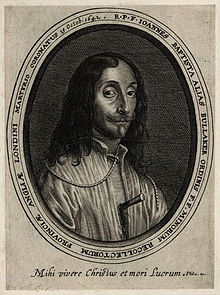
Venerable THOMAS BULLAKER, Franciscan, 1642

THE LAST GLORIA

Biography

"IN the year 1642," he writes, "on September 11, which fell on a Sunday, it pleased the Most High and Mighty God to put an end to my sufferings, and give me, His most unworthy servant, the consolation and hope that what I have so long desired and prayed for would shortly come to pass. Blessed be His Holy Name for all eternity. After having finished the Divine office on the morning of this Day, in order that I might better offer the unbloody Sacrifice of the Body and Blood of our Lord Jesus Christ to God, I recollected myself as was fitting and as best I could, and 1 prayed His Divine Majesty of His Infinite Goodness to grant me for love of Him to exchange life, and, knowing my own unworthiness, of His overflowing and Infinite Goodness to make up for my poverty. After having prayed thus with the greatest fervour that God granted me, I rose, and having washed my hands and said the Litany of the Blessed Virgin as usual, I began the Mass. But lo, as I was intoning the 'Gloria in Excelsis,' the apostate pursuivant Wadsworth came into the room, laid hands on me at the Altar, and took me to the Sheriff."

"Father, glorify Thy Name. A voice came from Heaven, I have glorified it and will glorify it again."—JOHN xii. 28.

Gloria in excelsis deo,
et in terra pax hominibus bonae voluntatis
Laudamus te.
Benedicimus te.
Adoramus te.
Glorificamus te.
Gratias agimus tibi propter magnam gloriam tuam.
Domine Deus, Rex caelestis, Deus Pater omnipotens.
Domine fili unigenite, Jesu Christe.
Domine Deus, Agnus Dei, Filius patris.
Qui tollis peccata mundi, miserere nobis.
Qui tollis peccata mundi suscipe deprecationem nostram.
Qui sedes ad dexteram patris miserere nobis.
Quoniam tu solus sanctus.
Tu solus Dominus.
Tu solus Altissimus, Jesu Christe.
Cum Sancto Spiritu in gloria Dei Patris. Amen.
Glory to God in the highest,
and on earth peace to people of good will.
We praise you.
We bless you.
We adore you.
We glorify you.
We give thanks to you for your great glory.
Lord God, Heavenly King, God Almighty Father.
Lord Only-begotten Son, Jesus Christ.
Lord God, Lamb of God, Son of the Father.
You who take away the sins of the world have mercy on us.
You who take away the sins of the world hear our prayer.
You who sit at the Father's right hand, have mercy on us.
For you alone are holy.
You alone, Lord.
You alone the Most High, Jesus Christ.
With the Holy Spirit in the glory of God the Father. Amen.

Sunday, October 12, 2014

+ Venerable THOMAS BULLAKER, OSF, 1642

FIRE FROM HEAVEN

Biography

Son of a well-known Catholic physician at Chichester, he was sent to St. Omer's, and thence entered the Franciscan Order in Spain. He first offered himself for the Mission in the West Indies, but England being pointed out as a richer field for his labours, thither he went. On landing at Plymouth he was arrested and imprisoned, and his sufferings then endured affected his health for the remainder of his life. As nothing could be proved against him, he was discharged, and for eleven years laboured in the country. The heroic sufferings of Father Ward enkindled in him, however, a holy envy, and he obtained leave to remove to London. He chose that part of the city where he was most in peril, but his hope for martyrdom was constantly deferred. Pursuivants came to his house, but would not take him, though he declared himself a priest. The next day they returned, and, though his Breviary was on the table, they left without arresting him. Deeming himself unworthy of the crown, he re­doubled his prayers and tears, and was arrested on Sunday, September 11, 1642, at the begin­ning of his Mass, and to his great joy was executed at Tyburn, October 12, 1642.

"I am come to cast fire on the earth, and what will I but that it be enkindled ?"—LUKE xii. 49

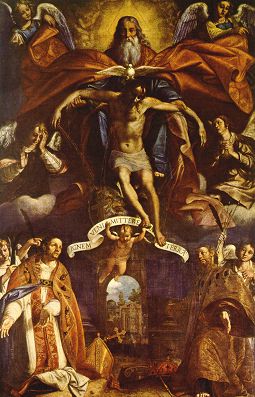
Ignem veni mittere in terram.


The motto over the High Altar of the English and Welsh College in Rome.

Saturday, October 11, 2014

Venerable THOMAS BULLAKER, Franciscan, 1642

THE IMAGE OF CHRIST

Biography

" IF you go on as you have begun, before many years," he said to the Sheriff, " the law will make it treason to believe in Jesus Christ. You must hate Him greatly since you cannot bear to behold the Statue and image which is a memorial of His Passion and our Redemption, and which the most praiseworthy piety of your forefathers erected at great cost." Hereupon those who stood around cried out," Where in the Scripture did Christ order an image of Himself to be made ?" Bullaker replied : " The precise words do not occur, yet the natural law, to which the Divine law is never opposed, approves of the practice. Reason teaches and experience proves that an injury done to a statue is done to Him whose person it represents. To make the thing clearer, if any one insulted, trampled underfoot, or broke to pieces the statue of the King, would you not say that he was guilty of treason ? And if it be so, ask yourselves, I entreat you, how much greater a crime it must be to injure and abuse the statue of Jesus Christ our Saviour, the King of kings, as you have lately done."

" Whom He foreknew, He also predestinated to be made conformable to the image of His Son."—ROM. viii. 29.

Sunday, September 28, 2014

Blessed JOHN WOODCOCK, Franciscan, 1646

PETITION FOR RE-ADMISSION

Biography

"THE more conscious I am that it is better to be poor in the House of the Lord than to abide in the tabernacles of sinners, so much the more the conviction of my soul still unaccomplished grows stronger in the day and night, and the former direction of my conscience, disturbed in spite of myself from its original seat and form, incessantly solicits and urges me on ; so that the desire for its reformation, no less than that sudden fall" (he had withdrawn as a postulant) " which threw both it and my whole being into confusion, inflames my soul. Wherefore, my dear Father William (I suspect this to be the head of the English Franciscans at Douai), I beseech you by our old friendship, which in this misfortune intercedes for me with you, to take pity on my miserable state, and apply yourself to obtain my pardon and the favour of my restoration. This is my desire, this I ask, this I wait for, for this I sigh and groan, and I desire it for no other motive than the pure love of God and His glory. That which you saw me previously desire lightly, strive now for Christ's sake to obtain for me more efficaciously. This will be my greatest happiness, and nothing whatever can add thereto. Farewell."

"The prayer of him that humbleth himself shall pierce the clouds."—ECCLUS. xxxv. 21.

Thursday, September 25, 2014

Saint OLIVER PLUNKET, Archbishop, on the Scaffold, 1681

A REPROVER OF SIN

Biography


"I WAS brought to the bar here after six months' imprisonment for a crime for which before I was arraigned in Ireland; a fact almost without precedent in five hundred years. Five weeks were allowed me to bring over my records and witnesses, which, owing to many difficulties, was insufficient. I asked for five days more. This was refused, and I was exposed, with my hands tied, as it were, to these merciless perjurers. You see what position I am in, and you have heard the protestations of my innocency, and I hope you will believe the words of a dying man. In support of my credit I assure you that I was offered my life if I would accuse other conspirators, but as I know of none I could not. I admit that I endeavoured to establish a proper discipline among the clergy according to my duty, and you see how I am rewarded. By false oaths they have brought me to this untimely death. But this wicked act, being a defect of person, ought not to reflect on the Order of St. Francis or on the Roman Catholic clergy. There was a Judas among the Apostles, and a Nicholas among the seven deacons, and as St. Stephen, the holy deacon, prayed for his enemies, so do I."

And so he went to his reward.

"Them that sin reprove before all, that the rest may have fear."—1 TIM. iv. 20.

Tuesday, September 23, 2014

Saint JOHN WALL, OSF, 1679

THE NARROW WAY

BORN of a Lancashire gentleman's family, he received the habit of St. Francis at Douay in 1651, being then thirty-two years of age. He entered on the English Mission, 1656, and laboured successfully for twelve years. At the breaking out of the Oates Plot he was apprehended, and, refusing to take the oath of allegiance, was imprisoned in Worcester gaol. Of his sentiments then he writes: " Imprisonment in these times, when none can send to their friends or their friends come to them, is the best means to teach us how to put our confidence in God alone in all things, and then He will make His promise good 'that all things shall be added unto us' (Luke xii. 31), which chapter, if every one would read and made good use of, a prison would be better than a palace, and a confinement for religion and a good conscience' sake more pleasant than all the liberties the world could afford. As for my own part, God give me His grace and all faithful Christians their prayers; I am happy enough. We all ought to follow the narrow way, though there be many difficulties in it. It is an easy thing to run the blind way of liberty, but God deliver us from all broad, sweet ways."

" How narrow is the gate and straight the way that leadeth to life, and few there are that find it."—MATT. vii. 14.

Thursday, September 04, 2014

Blessed THOMAS ABEL, Priest to Blessed JOHN FOREST, Franciscan

PERSEVERANCE

"COUNT not your tortures, my son, for that is to add pain to pain; but rather, as St. Paul says, ' Reckon the sufferings of this time not worthy to be compared with the glory to come.' Romans viii, 16.To which may well be added what the Prophet says to our Lord : ' For a thousand years in Thy sight are as yesterday which is past.' (in fact, Psalm 89:4) If you bear patiently the tortures that are inflicted on you, doubt not of your reward. O blessed and thrice happy reward which God gives to those who fear Him ; hence we pray, ' Lord, reward Thy servant.' But only on the condition, ' I have kept Thy words.' If, therefore, there is a reward for keeping the words of the Lord, keep them, my son. But you will ask, 'How long?' To the end! For our Saviour says, ' He that shall endure unto the end, he shall be saved.' Therefore, neither the tortures of thirty-seven days, nor of a thousand years, but the last end will crown your combat. Think you, my son, that we shall run together, and drink of the same chalice ? A greater combat awaits for me ; but for you lighter sufferings remain. Whatever they be, act manfully, our Lord supporting you. Farewell."

" He that shall endure to the end, he shall be saved."—MARK xiii. 13.

Wednesday, September 03, 2014

Blessed THOMAS ABEL, Priest to Blessed JOHN FOREST, OSF

HOW LONG, O LORD?

Biographies of Thomas Abel and John Forest

"ALTHOUGH human nature is terrified by the intensity of tortures, yet our faith demands and requires us to bear them. I said, ' My foot is moved because Thou hast turned away Thy face from me. Thou turnest away Thy face from me, and I became troubled ; troubled, I say, because the pain of the tortures which I desire is prolonged, and at the same time I am humbled ; humbled, and not raised up, because not drawn to my Saviour ; not drawn, because I am burdened with the weight of my sins* burdened and not refreshed by Him. What, then, profits my condemnation, if there be longer to wait ? Wherefore, I ask ? Because you have not availingly implored the mercy of God. For I know how much the prayer of the just man weighs before God. Because with the Lord there is mercy, and with Him plentiful redemption. In Thee have our fathers hoped; they have hoped, and Thou hast delivered them for the sake of David, Thy servant. Why, then, is there not an end put to these tortures ? I have now suffered seven and thirty days, and I find no rest. But my hope is that we shall die together by the same punishment."

" He that shall endure to the end, he shall be saved."—MARK xiii. 13.

Sunday, August 24, 2014

Venerable JOHN WALL, Franciscan, 1679

A VOLUNTARY OFFERING

Biography
With Blessed John Jones

ON hearing his sentence he made a bow, and said aloud, " Thanks be to God. God save the King. I beseech God to bless your Lordship and all this honourable bench." The judge answered, " You have spoken very well. I do not intend that you should die, at least not for the present, until I know the King's further pleasure." Father Wall writes : " I was not, I thank God for it, troubled with any disturbing thoughts, either against the judge for his sentence, or the jury that gave in such a verdict, or against any of the witnesses; for I was then of the same mind, as by God's grace I ever shall be, esteeming them all the best friends to me, in all they did or said, that ever I had in my life. And I was, I thank God, so present with myself whilst the judge pronounced the sentence that without any concern for anything in this world I did actually at the same time offer myself and the world to God." After five months' delay he was executed at Worcester, and was much rejoiced at being, as he was, the first martyr in that city. He had been arrested on the Oates Plot after twenty-two years on the Mission, and was offered his life if he would apostatise.

"He was offered, because it was His own will."—ISA. liii. 7.

Sunday, August 10, 2014

Blessed JOHN WOODCOCK, Franciscan, 1646

FORWARD TO THE MARK

Biography

BORN in Lancashire of a Protestant father, through his mother, a pious Catholic, he was educated at St. Omer's  and the English College, Rome. There he conceived the desire for a higher penitential life, and found admission with the Capuchins in Paris. "I have put on the habit,I praise sweet Jesus, almost three months," he wrote ; but his joy was short. Owing to the opposition of his relatives in England to his entering religion, and his weak health, in spite of his extraordinary piety he was dismissed the Order. He felt these reasons to be insufficient, and his aim never slackened to be a religious, and, further, to go on the English Mission. Eventually, after many difficulties, through the advocacy of his old friend Father William Anderton, a Recollect, he obtained admission into that Order. His illnesses were now frequent and grave, and he was sent to Spa for the waters. There he met with the Commissary General of his Order, and obtained at last leave to sail to England. H e had scarcely landed when he was apprehended, and, owing to the Civil War, remained for two years in Lancaster gaol, till he was sentenced and executed, and his perseverance was rewarded.

" One thing I do : forgetting the things that are behind, I press forward to the mark, to the prize of the supernal vocation of God in Christ Jesus."—PHIL. iii. 13

Wednesday, August 06, 2014

Blessed John Woodcock, Franciscan, 1646

TWICE HANGED

On hearing his sentence he was filled with inexpressible joy and exclaimed, "Praise be to God ; God be thanked." FF. Bamber and Whitaker, two secular priests, were condemned at the same time. The following night Father Woodcock spent in prayer and joyful contem­plation. At the dawn of day, August 7th, he and his two companions were led out in the usual way to execution. An immense and noisy crowd fol­lowed them with abuse and insult. The Catholics who were present were greatly edified and con­soled, and not a few Protestants were astonished at their constancy. Father Woodcock was the first to mount the ladder. After he had said a few words on the Catholic and Roman faith he was cast off, but by some accident,or through the carelessness of the executioner, the rope broke and he fell to the ground. He was stunned for a moment, but quickly recovered himself and rose to his feet unhurt. At the Sheriff's order he mounted the ladder again, and, after being thus hanged a second time, he was cut down and butchered alive. As the executioner's hand was within his body, " Jesus " broke from his lips.

" Thy dead men shall live, my slain shall rise again : awake and give praise, ye that dwell in the dust : for thy dew is the dew of the light: and the land of the giants thou shalt pull down into ruin."—ISA. xxvi. 19.

Sunday, August 03, 2014

+ Venerable THOMAS BELCHIAN, Franciscan, 1538

THE BAPTIST AND HEROD

Biography

VERY learned and a great preacher, at the age of twenty-eight he distinguished himself by his bold opposition to the tyranny of Henry VIII. In his book on the text, "They that wear soft clothing are in King's houses" he denounced the vices of the court and the avarice of the pliant clergy, and was therefore cast into prison. There, while being slowly starved to death, he was subjected to every sort of torture, but triumphed over all. Mere skin and bone, when at the point of expiring he commended his soul to God in the words, "In Thee, O Lord, have I put my trust; let me never be confounded." As he expired the gaol shook as if with an earthquake, and the keepers were terrified. The King himself was startled by this supernatural warning, and ordered him a decent burial, and on reading Father Belchiam's book he burst out weeping and deploring bitterly his own misery. The good impression, however, soon faded out, and he commanded the book to be burnt. But the King's jester, William Summer, daft from his birth, ran through the King's court exclaiming, "The plain dealing of one beggar baffles the King's anger."


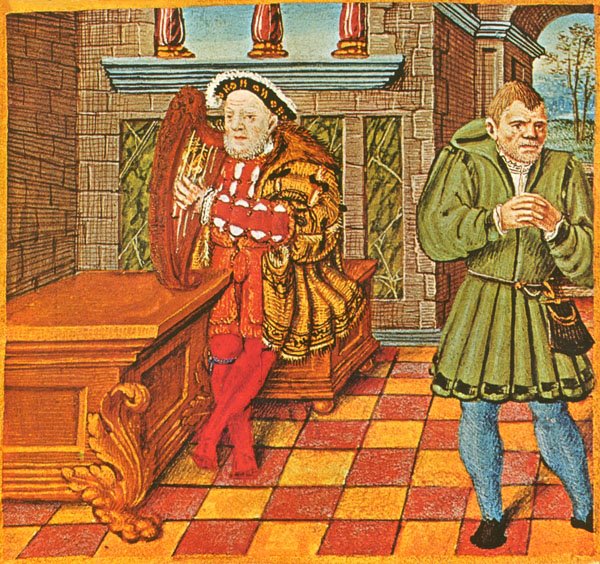
Here King Henry VIII pretends to be King David (in his own prayer book!) in the company of his jester.

"And the king was struck sad ; yet because of his oath and for them that sat with him at table ... he sent and beheaded John in prison."—MATT. xiv. 9, 10.

NOTE- I can find no other reference to this martyr- any information gratefully received.

Tuesday, July 29, 2014

Blessed WILLIAM WARD, Franciscan, 1641

A BURNING HEART

"BEHOLD the heart of a traitor!" cried the hangman, with the martyr's heart still palpitating in his hand, and threw it into the fire. Eager to obtain a relic, Count Egmont, a pious Catholic then in England, sent his servant with his handkerchief to dip it in the martyr's blood. Others, however, had been before him and not a drop remained. Searching in the ashes the servant found a heap of flesh singed with the fiery coals, and hastily wrapped the whole mass in his handkerchief. An attempt being now made to seize him, he fled across Hyde Park ; but as his pursuers gained he pretended to stumble, and hid his treasure in a bush as he fell. Taken before the magistrates, he was released through the Count's interest. The next day he returned and found his treasure, which proved to be the martyr's heart. As with St. Laurence, the divine fire within was stronger than the outward earthly flame. The hot coals adhering to the flesh had not burned the handkerchief, and the heart itself remained fifteen days incorrupt, when the Count had it embalmed, and took it to Paris with the relics of fourteen other martyrs whose executions he had witnessed, and on July 26, 1650, he signed and sealed the formal deed of authentication now in the archives of Lille.

"And there came in my heart as a burning fire shut up in my bones."—JER. xx. 9.

Monday, July 28, 2014

Blessed WILLIAM WARD, Franciscan, 1641

CLIENT OF ST. ANNE

Biography

HE was the first martyr under the persecution, renewed in spite of his promises, by Charles I. Born a Protestant, of a good Westmorland family, educated at Brasenose College, Oxford, he became a Catholic travelling abroad. On his return he practised his religion so openly that he was in prison at different times for nearly ten years. He entered Douay, was ordained priest 1608, and embarked for England. A contrary wind, however, drove him to Scotland, where, as a suspected priest, he was kept in an underground dungeon, in total darkness, for three years. Set free, he returned to England, and for thirty years, twenty of which were spent in prison, in spite of continuous suffering from a corrosive fistula and chronic toothache, he toiled for souls. He never preached, but holy conversation and the Sacrament of Penance were the weapons of his Apostolate, and the harvest reaped was abundant. When over eighty years of age, he was sentenced for saying Mass. He had a true Franciscan devotion to our Blessed Lady, and had always kept the Feast of her mother St. Anne with great solemnity, and he was now granted to die on that day. In the morning he said Mass, and going forth with joy won his crown.

"Give her of the fruit of her hands, and let her works praise her in the gates."—PROV. xxxi. 31.

Family of St Anne in Holy Conversation.

Monday, January 06, 2014

Father JOHN GENINGS, O.S.F., died 1660

THE PRODIGAL'S RETURN

THE news of his brother's martyrdom in December 1591 caused John Genings joy rather than sorrow, since he deemed it an escape from all Edmund's arguments and persuasions in favour of the Catholic religion, being himself strongly against the faith. But about ten days after his brother's execution, having spent all that day in sport and jollity, being weary with play, he returned home. There his heart felt heavy, and he began to weigh how idly he had passed the day. His brother's death came before him, and how he had abandoned all worldly pleasures, and for the sake of religion alone endured intolerable torments. Then the contrast of their two lives —the one mortified, fearing sin, the other spent in self-indulgence and in every kind of vice. Struck with remorse, he wept bitterly and besought God to show him the truth. In an instant joy filled his heart with a tender reverence for the Blessed Virgin and the Saints, of whom he had scarcely heard. He longed now to be of his brother's faith, and gloried in his eternal happiness. He left England secretly, was made priest at Douay, became a Franciscan, and the first Provincial of the renewed English Province.

" I will arise and go to my Father, and say to him, Father, I have sinned against heaven and before thee."—LUKE XV. 8. 18

Popular Posts