Visit the Bookshop


Tuesday, August 19, 2014

+ Blessed HUGH GREEN, Priest, 1642

A LAMENTATION FULFILLED

Biography

"AFTER he was cut down he came to his perfect senses," writes Dame Willoughby, " and sat upright. Protestants heard him and took great notice of it; for all the Catholics were pressed away by the unruly multitude except myself, who never left him until his head was severed from his body. Whilst he was thus calling upon Jesus, the butcher did pull a piece of his liver out instead of his heart, then with his knife raked on the body of the blessed martyr, who even then called on Jesus, and his forehead sweat, then it was cold, presently again burned ; his eyes, nose, and mouth ran with with blood and water. His patience was admirable, though his inward groans gave signs of those lamentable torments which for more than half-an-hour he suffered."
Then the people pulled him down by the rope which was about his neck ; then did the butcher cut him open, and turned the flap upon his breast, which the holy man feeling put his hand upon his bowels, and looking on his bloody hand laid it down by his side, and lifting up his right hand crossed himself, saying three times, * Jesu, Jesu, Jesu mercy !' The which, although unworthy, I am a witness of, for my hand was on his forehead, and many

" My eyes have failed with weeping, my bowels are troubled, my liver is poured out upon the earth."—-LAM. ii. 11.

Monday, August 18, 2014

Blessed ROGER CADWALLADOR, Priest, 1610

THE ETERNAL PRIESTHOOD

Biography


A NATIVE of Herefordshire, very learned and a noted Greek scholar, he began his priestly labours in England about 1594, and during sixteen years won many souls to the Church. Apprehended on Easter Day, in the house of Mrs. Winefride Scroope, near Hereford, he acknowledged to the Protestant Bishop that he was a priest, and added that he supposed that this would not be against him with the Bishop, whose special concern it was to maintain the sacerdotal dignity. " For, my Lord, either you must admit yourself to be a priest, or I can prove you to be no Bishop." 


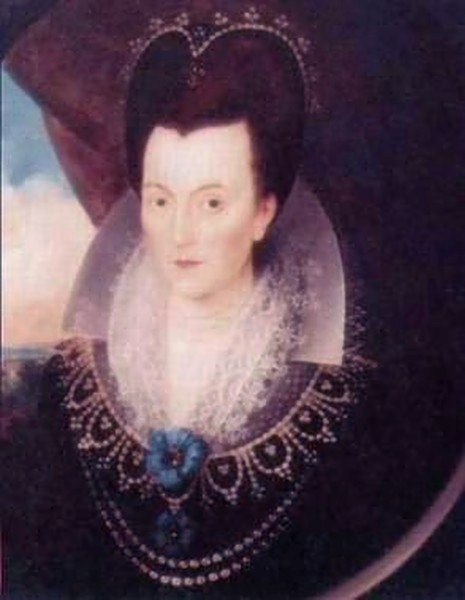
The Bishop, Herbert Westphaling (above) insisted that Christ was the only sacrificing priest of the New Testament, in that sense of the word, which is not common to all Christians, and hoped thus to free himself from being a priest. On which the Martyr replied, " Make that good, I pray you, my Lord, for so you will prove that I am no more a priest than other men, and consequently no traitor or offender against your law"; on which one, Holkins, to cover the Bishop's disgrace, said that the King himself had said that these kind of men were so numerous that he should never have done if he put them all to death.

"But this (Jesus) for that He continueth for ever hath an everlasting priesthood."—HEBR. vii. 24

Sunday, August 17, 2014

Blessed THOMAS HOLFORD, Priest, 1588

A HUNTED LIFE

Biography

THE son of a Protestant minister in Cheshire, he was reconciled by Father Davis, and ordained, and his life as a priest seems to have been a fulfilment of the Gospel precept of flight under persecution. " He was first searched for," says Father Davis, "in the house where I lay, on All Souls' Day, but escaped. Again, after being nearly taken in the search for Babington, he repaired again to a house where I was staying, but we escaped to a hay-barn, through a secret place at the foot of the stairs. He then laboured for souls in his own county, Cheshire, was apprehended, sent to London, and lodged in an inn at Holborn. Then, rising early, he managed to pass the pursuivants, who had drunk hard and were asleep. On Holborn Viaduct he met a Catholic gentleman, who, seeing him half-dressed, thought him a madman. Pulling off his yellow stocking and white boot-hose, he walked barefoot by unfrequented paths till he arrived, late at night, at a house where I lay, about eight miles from London. He had eaten nothing, and his feet were bleeding and torn with briars and thorns. My hosts and their daughters tended him and put him to bed. The next year he was apprehended, and executed, August 28, at Clerkenwell."


" They wandered about in sheep-skins and goat-skins, being in want, distressed, afflicted, of whom the world was not worthy."—HEB. xi.37, 38.

Saturday, August 16, 2014

Blessed HUGH GREEN, Priest, 1642 on the Scaffold

FOUR THINGS MORE

Biography

"THERE be four things more: one God, one faith, one baptism, one Church. That there is one God we all acknowledge, in whom, from whom, and by whom all things remain and have their being. That there is one faith appears by Christ's praying that St. Peter's faith (He said not faiths) should never fail; and He promised to be with it to the end of the world. That there is one baptism : we are all cleansed by the laver of water in the Word. That there is one Church, holy and sanctified : doth not St. Paul say that it is a glorious Church without spot or wrinkle or any such thing? Now the marks of this Church are sanctity, unity, antiquity, universality, which all of us in all points of faith believe. But some will say we are fallen off from this Church of Rome, but in what pope's time, in what prince's reign, or what are the errors, none can discover. No, this holy Church of Christ did never err. By the law I am now to die for being a priest. Judge you, can these new laws overthrow the authority of God's Church ? Nevertheless, I forgive you, and pray God for all."

"That they may be one, as we also are one."—JOHN xvii. 22.

Friday, August 15, 2014

Blessed HUGH GREEN, Priest, 1642 on the Scaffold

THE FOUR LAST THINGS

Biography


"THERE be four principal things which all men ought to remember : death, judgment, Heaven and Hell. Death is a horror to nature, but that which followeth is much more terrible, viz. judgment, if we die not as we ought; and as we dispose ourselves to good or evil in this life, so shall the measure of our punishment or glory succeed. I am here condemned to die for my religion and for being a priest: we know there must be priests, for God, foretelling of the Church by the prophets, saith, 'Thou art a priest for ever after the order of Melchisedech' (Ps. cix.). 'And from the rising of the sun unto the going down thereof, there shall be a clean sacrifice offered in My Name (Mai. i.11). Now'four things are to be considered : a God, a sacrifice, a priest, a man : such am I, and therefore I must die. Wherefore do we receive holy unction and are made priests but to offer sacrifice to God ? But I am condemned for -being ordained by the See of Rome. St. Paul saith, 'the Romans have the Catholic faith' and gives God thanks that their faith and his were one, of which Catholic faith I am."

"In all thy works remember thy last end and thou shalt never sin."—ECCLUS. vii. 40

Thursday, August 14, 2014

Blessed HUGH GREEN, Priest, 1642

ABSOLVED FROM AFAR

BORN in London, and a convert from Cambridge, he was arrested in attempting to leave England, in consequence of King Charles I's banishment of priests, and sentenced after five months' imprisonment. 

Dame Bridgette Willoughby, an eye-witness, says, that "his devotion on his way to death was most edifying. He was taken from the hurdle and kept on the hill at some distance from the scaffold until three poor women were hanged. Two of them had sent him word the night before that they would die in his faith. This comforted him much, for he had done his utmost to speak with them, but failed. They therefore sent again to desire him that when they had made a confession of their sinful lives at the foot of the gallows, on their making the sign he should absolve them. This with great joy iin his heart, and much benefit (as it is hoped) on theirs, was performed. They then turned their faces towards us, and throwing forth their arms cried out to him, ' God be with you, sir,' and so died. But the third woman turned from us towards the press of people, her face or speech never tending towards us."

" The Spirit breatheth where He will."—JOHN iii. 8.

Wednesday, August 13, 2014

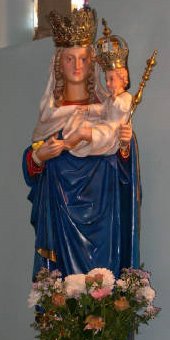
Prayer to Our Lady of Walsingham

for the Conversion of England.

The conversion of England was long dreamed about by St. Paul of the Cross. We too should pray daily for the return of England to the One True Church.

"O Blessed Virgin Mary, Mother of God, and our own most gentle Queen and Mother, look down in mercy upon England, thy Dowry, and upon us all who greatly hope and trust in thee. Through thee it was that Jesus our Saviour and our Hope was given unto the world; and he hath given thee to us that we might hope still more. Plead for us thy children, whom thou didst receive and accept at the foot of the Cross, O sorrowful Mother. Intercede for our separated English brethren, that they may be united with us in the one true Fold. Pray for us all, dear Mother, that by faith fruitful in good works, we may all deserve to see and praise God together with thee in our heavenly home. Amen."

Other prayers for the Conversion of England.

O MERCIFUL God, let the glorious intercession of Thy saints assist us, particularly the most blessed Virgin Mary, Mother of Thy only-begotten Son, and Thy holy Apostles, Peter and Paul, to whose patronage we humbly recommend this country. Be mindful of our fathers, Eleutherius, Celestine, and Gregory, bishops of the Holy City; of Augustine, Columba, and Aidan, who delivered to us inviolate the faith of the Holy Roman Church. Remember our holy martyrs, who shed their blood for Christ: especially our first martyr, Saint Alban, and Thy most glorious bishop, Saint Thomas of Canterbury. Remember all those holy confessors; bishops, and kings, all those holy monks and hermits, all those holy virgins and widows, who made this once an island of saints, illustrious by their glorious merits and virtues. Let not their memory perish from before Thee, O Lord, but let their supplication enter daily into Thy sight; and do Thou, who didst so often spare Thy sinful people for the sake of Abraham, Isaac, and Jacob, now, also, moved by the prayers of our fathers, reigning with Thee, have mercy upon us, save Thy people, and bless Thy inheritance; and suffer not those souls to perish, which Thy Son hath redeemed with His own most Precious Blood, Who liveth and reigneth with Thee, world without end. Amen.

Let us pray.
O most loving Lord Jesus, Who, hanging on the Cross, didst commend us all in the person of Thy disciple John, to Thy most sweet Mother, that we might find in her our refuge, our solace, and our hope; look graciously upon our beloved country, and on those who are bereaved of so powerful a patronage; that, acknowledging once more the dignity of this holy Virgin, they may honour and venerate her with all affection of devotion, and own her as Queen and Mother. May her sweet name be lisped by the little ones, and linger on the lips of the aged and the dying; and may it be invoked by the afflicted, and hymned by the joyful; that this Star of the Sea being their protection and their guide, all may come to the harbour of eternal salvation. Who livest and reignest, world without end. Amen.

Cardinal Manning on Hindrances to the spread of the Catholic Church

"Hindrances to the Spread of the Catholic Church in England

In a series of autobiographical Notes, written in the summer of 1890, Cardinal Manning entered into a most searching inquiry into the 'Hindrances' which stand in the way of the spread of Catholicism in England. In these Notes Cardinal Manning relates, with admirable force and directness, the difficulties which he had to encounter, not so much from opposition on the part of the people of England, as from apathy, ignorance, and prejudice on the part of Catholics themselves. Although written more than a century ago, the essence of what he says could be applied today and for that reason it merits an attentive reading.

July 19th 1890.
A still greater obstacle to the spread of the Faith is the shallowness of our preaching. This appears to me to come - first, from a want of wise choice of the subjects we preach upon; and, secondly, from a shallow mode of treatment.
As to the choice of subjects: compare the Epistles of St. Paul with a volume of modern sermons. The chief and prominent topics of St. Paul are - God, the Incarnation, the Holy Ghost, that is, the Eternal Truths from which all other truths descend. These are always present. Whatever details follow, they are as consequence from the theology, which is always present as the sun at noonday.
St. Paul tells the Corinthians that he knew nothing among them but ' Jesus Christ and Him crucified.' This truth contains and justifies the whole faith and piety of the Gospel. But how often do we hear it preached upon? If the great Truths are not perpetually held up, all consequent truths seem to be arbitrary and mere assertion; e.g. the title 'Mother of God' is incomprehensible without the explicit knowledge of the Incarnation, and the Incarnation itself without the explicit knowledge of the Holy Trinity.

A French priest of Pontigny published a book on " The Deified Soul " of our Lord, because he had found the Apollinarian heresy so widely held by pious Catholics. The articles of the Apostolic Creed ought to be so continually held up before the intelligence of the faithful that all other subjects, such as the dignity and sanctification of the Blessed Virgin, the real and substantial presence of our Lord in the Blessed Sacrament, may be seen to be direct and evident consequences.

There is also a majesty and greatness in these divine and eternal realities that subdue and attract the intellect and conscience. It would seem inevitable that our preachers should preach the Gospel in all its length and truth and depth and height.

The confraternities of the Sacred Heart and the Most Precious Blood, the devotion of the Five Sacred Wounds, the mysteries of the Rosary and the Crucifix, all are the Gospel in its fullness. So also the work of the Holy Ghost, the Sanctifier and the Absolver, with the Sacrament of Penance, enable us to preach and to out-preach all Evangelists, Methodists, and Salvationists that were made. Why then do we not draw men as Spurgeon and "General" Booth or Hugh Price Hughes? I am afraid that there are two obvious reasons. We choose topics unwisely, and we are not on fire with the love of God of souls.

Nevertheless, when we give retreats or missions our priests preach the Eternal Truths and the Gospel as fully and as powerfully as anybody. But why reserve these vital and sovereign Truths to once a year? Surely they ought to be proclaimed "upon the housetops." If they were, the English people would feel that we are more scriptural and more evangelical than their own preachers. When we preach pieties and controversies it does not touch their souls. They are neither won nor moved by us. But surely we ought to win and move, and draw and soften the souls of men as our Lord did, and by the same truths. His preaching of the Eternal Truth was "as fire, and as the hammer that breaketh the rocks in pieces."

So also was the preaching of the Apostles, when they preached in the name of Jesus. This preaching converted the world, and no other will convert England. The English people as a whole, still believe in our Lord, His love, His passion, His absolution, His most Precious Blood - and also in repentance, grace, and conversion. Why do not we meet these Truths in their minds and the needs of their souls, by offering to them all these things in greater freshness and beauty? They come to hear us hoping for these things, and they go empty away, saying that our preaching does not come home to them, and is not what they need. When we have got them to confession we can teach them Rosaries and the use of Holy Water.

The other cause of our shallowness is our shallow treatment of the subject we have chosen. No doubt overwork is the reason with some. But a priest who is overworked in the saving of souls can never be much at a loss to preach the Gospel. He is always habitually speaking of God, His will, His kingdom, and he has only to think aloud. Our difficulty is in ourselves. It is what we are that preaches, and we are not only what we know but what we feel, what we realise, what by experience has become a part of ourselves.

Every man speaks readily of that which chiefly fills his mind. If we lived more for God, with God, and in God, we should have little difficulty of speaking about Him. But is this true of us? Even good priests preach daily: and choose dogmatic or moral subjects rather than mystical or ascetic. By mystical I do not mean in the sense of St. Teresa’s visions – but on such texts as Quam magna multitudo, etc., or Gustate et videte quonium suavis est Dominus. Is not this because our wells are shallow, or dry?

Another cause is hurry and haste. I have known men who have not even chosen their subjects or their text until they are on their way to the church. Surely this is tempting God; if not doing His work deceitfully. Others again take the first subject that comes to their mind, or that comes most easily to them because they have so often talked about it. But surely we ought first to think about what our people most need."

Feast of St Eusebius


Protector of the Icon of our Lady of Consolation, long venerated in England.

Tuesday, August 12, 2014

Blessed THOMAS PERCY, Layman, 1572

THE ABOMINATION OF DESOLATION

Biography


THE freedom to practise their religion, which Catholics had regained under Mary, was rudely swept away by Elizabeth. By the Act of Supremacy the authority of the Pope was abolished, and his jurisdiction transferred to the Crown. By the Act of Uniformity the Holy Sacrifice of the Mass was prohibited, and in alj churches the Protestant Book of Common Prayer was alone to be used. Transgression of the above Acts incurred for the first offence forfeiture of property, for the second perpetual imprisonment, for the third death. Thus the sanctuaries revered for ages became empty sepulchres. The Royal Arms were substituted for the Crucifix, the images of Our Lady and the Saints were torn down, and the innumerable altars overturned and desecrated. Non-attendance at the Protestant Church was punishable with a fine ; the exercise of any priestly office with imprisonment—if repeated, with death. This sacrilegious usurpation of religious authority by the Crown, the privation of the Sacraments even at the hour of death, the absolute hopelessness of obtaining any constitutional redress, led to the Northern Rising, in which B. Thomas Percy, Earl of Northumberland, laid down his life for the faith.

"And behold our sanctuary and our beauty and our glory is laid waste, and the Gentiles have defiled them. To what end, then, should we live any longer?"—1 MACH. ii. 12.

Monday, August 11, 2014

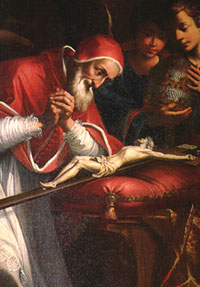
LETTER OF POPE ST. PIUS V

THE NORTHERN RISING

Biography of the Pope St Pius V


To the leaders of the Rising, the Earls of Westmorland and Northumberland, who sought his advice, the Pope replied as follows : "Our Lord Jesus Christ has inspired you with this resolution (which is worthy of your zeal for the Catholic faith) to endeavour, by delivering yourselves and your kingdom from a woman's passion, to restore it to its ancient obedience to the Holy Roman See. And if in maintaining the Catholic faith and authority of this Holy See your blood should be shed, it is far better to pass quickly to Eternal life than to live on in shame and ignominy to the loss of your souls, subject to a feeble woman's passion. For think not, beloved sons in Christ, that those Bishops or other leading Catholics of your country whom you mention have made an unhappy end; who for their refusal to give up their confession of the Catholic faith have been either cast into prison or unjustly visited with other penalties. For their constancy, which has been encouraged by the example (still, as we believe, effective) of the B. Thomas, Archbishop of Canterbury, can be praised by none as much as it deserves. Imitate this constancy yourselves. Be brave and firm in your resolve, and abandon not your undertaking through fear or threat of danger."


" Behold, He shall neither slumber nor sleep that keepeth Israel."—Ps. cxx. 4.

Sunday, August 10, 2014

Blessed JOHN WOODCOCK, Franciscan, 1646

FORWARD TO THE MARK

Biography

BORN in Lancashire of a Protestant father, through his mother, a pious Catholic, he was educated at St. Omer's  and the English College, Rome. There he conceived the desire for a higher penitential life, and found admission with the Capuchins in Paris. "I have put on the habit,I praise sweet Jesus, almost three months," he wrote ; but his joy was short. Owing to the opposition of his relatives in England to his entering religion, and his weak health, in spite of his extraordinary piety he was dismissed the Order. He felt these reasons to be insufficient, and his aim never slackened to be a religious, and, further, to go on the English Mission. Eventually, after many difficulties, through the advocacy of his old friend Father William Anderton, a Recollect, he obtained admission into that Order. His illnesses were now frequent and grave, and he was sent to Spa for the waters. There he met with the Commissary General of his Order, and obtained at last leave to sail to England. H e had scarcely landed when he was apprehended, and, owing to the Civil War, remained for two years in Lancaster gaol, till he was sentenced and executed, and his perseverance was rewarded.

" One thing I do : forgetting the things that are behind, I press forward to the mark, to the prize of the supernal vocation of God in Christ Jesus."—PHIL. iii. 13

Saturday, August 09, 2014

+ Venerable THOMAS PALASOR, Priest, 1600

POISON DETECTED

Biography

A YORKSHIRE man by birth, he was apprehended as a priest in the house of Mr. John Norton in that county, with his host and Mr. John Talbot, and all three were confined in Durham gaol. There at dinner some broth was set before Mr. Palasor, and, on his preparing to taste it, the bone of mutton in the dish ran blood in the form of crosses, and of O's in the broth. He therefore abstained from taking it. The maid, noticing this, carried the broth back to her mistress, who spiced it over and sent it by the same maid to Mr. Talbot and Mr. Norton, when the same phenomenon was repeated. The maid, by name Mary Day, seeing this, came to Palasor, confessed that the broth had been poisoned by the malice of her mistress, the gaoler's wife, and on her knees begged his forgiveness, and asked him to make her one of his faith. She was instructed and reconciled, and became servant to a Catholic gentlewoman, Eleanor Forcer, who bore testimony to the above occurrence. Palasor was condemned to death for returning to England as a priest, contrary to the statute, and Mr. Norton and Mr. Talbot received the same sentence for harbouring and assisting him, and all three together were executed at Durham.

"They shall take up serpents, and, if they shall drink any deadly thing, it shall not hurt them."—MARK xvi. 18.

Friday, August 08, 2014

Blessed JOHN FELTON, Layman, 1570

CHAMPION OF THE POPE

As a cruel persecutor of the faith she had sworn to defend, Elizabeth was excommunicated and deposed by St. Pius V, February 24, 1570, and the Bull of excommunication was found on May 25, the Feast of Corpus Christi, on the gates of the Bishop of London's palace, where it had been placed by John Felton, a brave and zealous Catholic gentleman. After this act he refused to fly, trusting, he said, to God's grace for whatever might happen, and when the escort arrived for his arrest, he voluntarily surrendered himself. Both at his apprehension and his trial, he openly acknowledged having posted up the Bull, and said that, as he held the Pope to be the Vicar of Christ, what came from him ought to be duly venerated. Notwithstanding this public confession, he was three times racked in the vain hope of extracting from him admission, compromising others. In his satin doublet, on the day of his martyrdom, as he faced the crowd, calm and unmoved, he looked indeed a royal champion, and he told the people that he died for the Catholic faith. His last words on being disembowelled were " Jesus, Jesus." He sent the Queen, from the scaffold, a ring worth ^400, showing he bore her personally no ill-will. He suffered, St. Paul's Churchyard, London, August 8.

"Thou art Peter, and upon this rock I will build My Church."—MATT. xvi. 18.


Other martyrs connected with the Excommunication
Martyrs connected with the Excommunication: Thomas Plumtree p., 4 Jan., 1571; John Storey, D.C.L., 1 June, 1571; Thomas Percy. Earl of Northumberland, 22 Aug., 1572; Thomas Woodhouse p., 13 June, 1573.

Thursday, August 07, 2014

+ Blessed EDWARD BAMBER, Priest, 1646

A PUBLIC CONFESSION

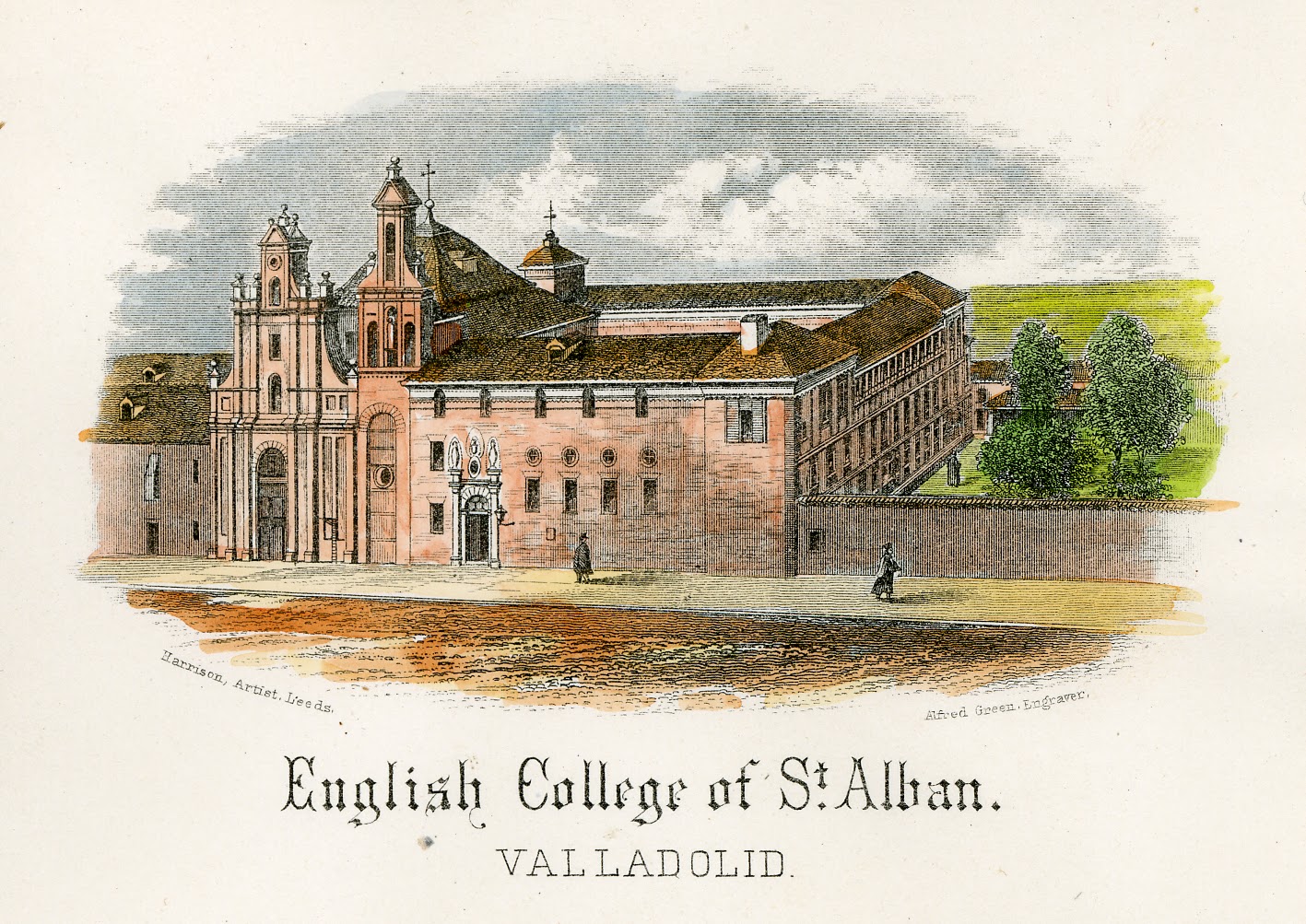
BORN at the Moor, the ancient place of his family in Lancashire, he made his studies at Valladolid


and returned to England a priest. The brief memoirs of his life speak of his indefatigable labours in saving souls, his unwearied diligence in instructing Catholics and converting Protestants, the good he did in times and places of the greatest danger, and the courage he displayed as above the strength of man. He was apprehended during the Civil War, and was kept thereafter in Lancaster Castle for three years without trial. At length the Sessions were re-opened, and, on the worthless evidence of two apostates, he was sentenced. On August 7th he and two fellow-priests were drawn to the place of execution, and one Croft, a wretched felon, was brought to die with them. Father Bamber used all his efforts to save the man's soul, promising him, if he would only repent, declare himself a Catholic, and publicly confess some of his more public sins, he would absolve him. In spite of the threats and clamours of the officials and minister, the prisoner openly declared he died a Catholic, publicly confessed some of his most scandalous crimes, and was publicly absolved by Father Bamber. The priest and the penitent then sealed their profession with their blood.

"Confess your sins one to another."—JAS. v. 16.

Wednesday, August 06, 2014

Blessed John Woodcock, Franciscan, 1646

TWICE HANGED

On hearing his sentence he was filled with inexpressible joy and exclaimed, "Praise be to God ; God be thanked." FF. Bamber and Whitaker, two secular priests, were condemned at the same time. The following night Father Woodcock spent in prayer and joyful contem­plation. At the dawn of day, August 7th, he and his two companions were led out in the usual way to execution. An immense and noisy crowd fol­lowed them with abuse and insult. The Catholics who were present were greatly edified and con­soled, and not a few Protestants were astonished at their constancy. Father Woodcock was the first to mount the ladder. After he had said a few words on the Catholic and Roman faith he was cast off, but by some accident,or through the carelessness of the executioner, the rope broke and he fell to the ground. He was stunned for a moment, but quickly recovered himself and rose to his feet unhurt. At the Sheriff's order he mounted the ladder again, and, after being thus hanged a second time, he was cut down and butchered alive. As the executioner's hand was within his body, " Jesus " broke from his lips.

" Thy dead men shall live, my slain shall rise again : awake and give praise, ye that dwell in the dust : for thy dew is the dew of the light: and the land of the giants thou shalt pull down into ruin."—ISA. xxvi. 19.

Tuesday, August 05, 2014

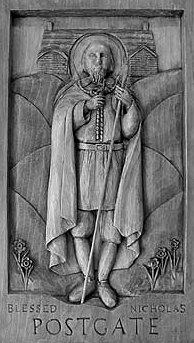
Blessed NICHOLAS POSTGATE, Priest, 1679

THE WINGS OF A DOVE

Biography

Hunted about during the Oates persecution, he was at last arrested and condemned, not as a plotter, but for high treason as a priest. On the eve of his martyrdom at York came, with other visitors, Mrs. Charles Fairfax and Mrs. Meynel of Kilvington in great grief at taking leave of him. But the Confessor, bright and cheerful, laid his right hand on one and his left on the other and said, " Be of good heart, you shall both be delivered of sons, and they will be both saved." The two ladies gave birth to sons, who were baptised and died in infancy. In his weary hunted life he prayed as follows :—

And thus, dear Lord, I fly about In weak and weary case ; And, like a dove in Noe's Ark, I find no resting-place.
My weaned limbs, sweet Jesus, mark ; And when Thou thinkest best, Stretch forth Thy hand out of the ark And take me to Thy breast.

The new Mission of Pickering is a memorial of the Martyr's ministry.

" Who will give me wings like a dove, and I will fly and be at rest."—Ps. liv. 7.

Monday, August 04, 2014

Blessed NICHOLAS POSTGATE, Priest, 1679

THE INNER LIFE

Biography

BORN in Yorkshire of parents great sufferers for the faith, he returned from Douay to the English Mission, June 1630. He laboured in his native county and converted hundreds from sin and heresy. With all his active work he led the life of a solitary in a hut on Blackamoor, which is thus described by a contemporary :—

Nor spared they Father Posket's blood, A reverend priest, devout and good, Whose spotless life in length was spun To eighty years and three times one. Sweet his behaviour, grave his speech, He did by good example teach. His love right bent, his will resigned, Serene his look and calm his mind ; His sanctity to that degree As Angels live, so lived he.

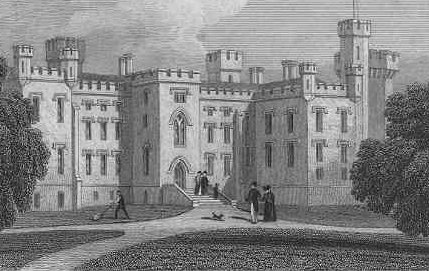
A thatched cottage was the cell Where this contemplative did dwell, Two miles from Mulgrave Castle 't stood,
Sheltered by snow-drifts, not by wood. Tho' there he lived to that great age It was a dismal hermitage, But God placed there the Saint's abode For Blackamoor's greater good.


" You are dead and your life is hid with Christ in God."—COL. iii. 3.

Sunday, August 03, 2014

+ Venerable THOMAS BELCHIAN, Franciscan, 1538

THE BAPTIST AND HEROD

Biography

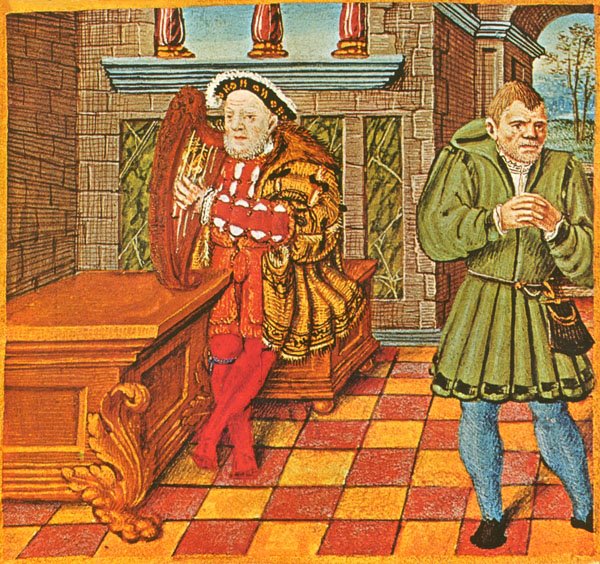
VERY learned and a great preacher, at the age of twenty-eight he distinguished himself by his bold opposition to the tyranny of Henry VIII. In his book on the text, "They that wear soft clothing are in King's houses" he denounced the vices of the court and the avarice of the pliant clergy, and was therefore cast into prison. There, while being slowly starved to death, he was subjected to every sort of torture, but triumphed over all. Mere skin and bone, when at the point of expiring he commended his soul to God in the words, "In Thee, O Lord, have I put my trust; let me never be confounded." As he expired the gaol shook as if with an earthquake, and the keepers were terrified. The King himself was startled by this supernatural warning, and ordered him a decent burial, and on reading Father Belchiam's book he burst out weeping and deploring bitterly his own misery. The good impression, however, soon faded out, and he commanded the book to be burnt. But the King's jester, William Summer, daft from his birth, ran through the King's court exclaiming, "The plain dealing of one beggar baffles the King's anger."


Here King Henry VIII pretends to be King David (in his own prayer book!) in the company of his jester.

"And the king was struck sad ; yet because of his oath and for them that sat with him at table ... he sent and beheaded John in prison."—MATT. xiv. 9, 10.

NOTE- I can find no other reference to this martyr- any information gratefully received.

Saturday, August 02, 2014

Blessed THOMAS WHITAKER, Priest, 1646

CASTING OUT FEAR

Biography

His father was master of a noted free-school in Burnley, Lancashire, and Thomas, showing promise was sent to the English College, Valladolid, at the charge of a neighbouring Catholic family, Towneley of Towneley. (and also Towneley Hall, the family also supported King James III and King Charles III). He entered on the English Mission in 1638, and gained many souls, facing bravely all dangers, notwithstanding his naturally timorous disposition. Being urged, on the road to Lancaster, to effect his escape from the room in which he was confined, he stripped himself, and, forgetting to throw out his clothes before him, the passage gained he found himself free, but naked. After wandering some miles in this strange condition, he providentially met with a Catholic, who gave him shelter and clothing. Again arrested, he was cruelly beaten and cast into Lancaster gaol.


There for three years his life was spent in continual prayer to God to strengthen him for the combat, and in ministering to the two priests, Father Bramber and Father Woodcock, OSB, his seniors, who were his fellow-prisoners. His trial and sentence were quickly despatched as he had confessed himself a priest. At the place of execution his anguish of soul was evident, but grace triumphed over nature. He absolutely refused a proffered pardon, and with Father Bamber and Father Woodcock, OSB, he won his crown, Lancaster, August 7.

"Perfect charity casteth out fear."— 1 JOHN iv. 18.

Saint RALPH SHERWIN, Priest, 1581

left Rome today in 1577.

His last words when he was martyred on December 1, 1581 were:

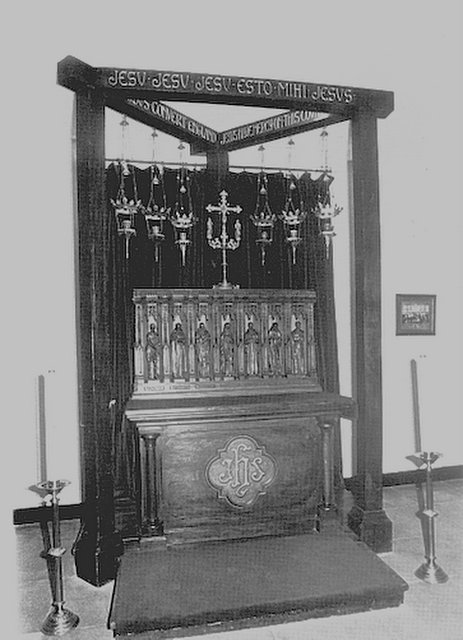
"Jesu, Jesu, Jesu, esto mihi Jesus" Jesus, Jesus, Jesus be for me Jesus"

These are inscribed over the altar in the crypt of Tyburn Convent in London to this day. The altar is surrounded by relics of the martyrs. Sadly, a new "peoples'" altar has been placed in front of it in recent years. Ironic given the martyrs were the firmest opponents of protestants with their communion tables substituting for altars.

Friday, August 01, 2014

JOHN THOMAS, Layman, 1593

PETER REPENTANT

HE was condemned, together with Bird, but, horrified at the sentence of death, promised the judge he would go to Church. The judge could not recall the sentence given, so countermanded his execution till the Queen's pardon should arrive. On his return to prison, helped probably by Bird's exhortations, he conquered the fear of death by the fear of Hell, and sent word at once to the judge that he repented of his cowardice, and would do nothing contrary to his duty as a Catholic. The judge said, " Is he in such a hurry for the gallows ? Let him not be afraid ; if he persists we can hang him at the next assizes." Yet he appeared at the gallows with the other criminals, carrying his winding-sheet, and said to the Sheriff he had been condemned and had come to die. But the Sheriff said that, though he would meet his wishes with the greatest pleasure, were it in his power, he could not do so, as his name was not on the list. So Thomas retired, lamenting his sin and his past life, for he had been a Calvinist minister ; but God did not fail him, and, purged by a long penance, with a large increase of merits, in the August following he obtained what he desired, at Bardich, Winchester.

" And the Lord turning looked on Peter . . . and Peter going out wept bitterly."—LUKE xxii. 61, 62.

Thursday, July 31, 2014

+ Blessed EVERARD HANSE, Priest, 1581

SHOD FOR THE GOSPEL

BORN of Protestant parents in Northamptonshire, he received heretical Orders and was presented to a rich living. His preaching was much admired, and he was carried away by his success. Meantime his brother William, having been reconciled, went to Rheims, and in 1579 returned to England as a priest. He tried in vain to open Everard's. eyes to the truth, but a dangerous illness placed all things in a new light, and William had the consolation of receiving his brother into the Church. Everard lost no time in entering the seminary at Rheims, and in 1581 was sent as a priest on the English Mission. He was visiting some prisoners in the Marshalsea when the gaoler noticed the foreign make of his boots, and took him before a magistrate. He confessed himself a priest, and only three months after his arrival in England he was imprisoned in Newgate. 


On his trial he publicly defended the Pope's spiritual supremacy, and frankly confessed that he wished all believed the Catholic faith, as he did himself. That was enough. He was sentenced to death, and on the scaffold he appeared bright and untroubled as ever. When his heart was thrown into the fire, it leapt repeatedly, as if marking God's approval of his constancy. He suffered at Tyburn, July 31.

"How beautiful are the feet of those that preach the gospel of peace, that bring glad tidings of good things."—ROM. x. 15.

Our Lady of Aberdeen


"Aberdeen -- Our Lady at the Bridge of Dee, described as Our Lady at the Brig is mentioned in 1459. Near to the chapel was a well dedicated to the Blessed Virgin, where miraculous favours were obtained. In the cathedral were four altars of Our Lady, each with her image, one being of silver. "


Although Scotland is now sadly known as a Protestant country, many in the country of the "Old Faith" have a deep devotion to the Virgin Mary. From 1560 to 1625, Scottish Catholics were persecuted, and many lovely images of Mary and the saints were destroyed. The only one known to have survived is a little wooden image of Our Lady and her Divine Child known as Our Lady of Good Success (Onze-Lieve-Vrouw van Voorspoed) that now stands in Brussels, Belgium in the Church of Our Lady of Finnisterrae. In Scotland, she was known as Our Lady of Aberdeen. The image of Our Lady was successfully hidden by a faithful Scottish family until it was sent to safety in Belgium. Shortly after World War I, a group of Scottish highlanders planned to kidnap the image to take it back to Scotland, but when they saw the great devotion of her Belgian clients, they abandoned their plans and joined in the prayers at her shrine. A copy of the image stands in the cathedral at Aberdeen.

Another copy of the original in a Scottish Church.

Wednesday, July 30, 2014

+ Blessed THOMAS ABEL, Priest, 1540

AT LAST

QUEEN CATHERINE'S confidential chaplain, and one of her defenders in the divorce case, he had languished some six years in prison, hoping for the end. The news of B. Forest's "greater combat" had doubtless reached his cell, but, far from intimidating him, served both to intensify his longing for the crown and at the same time to strengthen his patience in awaiting God's will. At last, in 1540, he, Richard Featherston, and Edward Powel, priests, and co-defenders with him of Queen Catherine in the divorce, were attainted for denying the King's supremacy and adhering to the Pope's, and on July 30 they were led out to execution. In grim mockery three Protestants—Barnes, Garret, and Jerome—who were attainted for heresy, were made to suffer with them, a Catholic and a Protestant being coupled together on each hurdle. On arriving at Smithfield the three Catholics were hanged, drawn, and quartered, and the three Protestants were burnt. A Frenchman who stood by, on beholding the strange exhibition of capricious cruelty, said to a friend in Latin : "They have quaint ways of managing things in England— those who are for the Pope are hanged, and those who are against him are burned."


"Wait on God with patience ; join thyself to God and endure, that thy life may be increased in the latter end."—ECCLUS. ii. 3


Tuesday, July 29, 2014

Blessed WILLIAM WARD, Franciscan, 1641

A BURNING HEART

"BEHOLD the heart of a traitor!" cried the hangman, with the martyr's heart still palpitating in his hand, and threw it into the fire. Eager to obtain a relic, Count Egmont, a pious Catholic then in England, sent his servant with his handkerchief to dip it in the martyr's blood. Others, however, had been before him and not a drop remained. Searching in the ashes the servant found a heap of flesh singed with the fiery coals, and hastily wrapped the whole mass in his handkerchief. An attempt being now made to seize him, he fled across Hyde Park ; but as his pursuers gained he pretended to stumble, and hid his treasure in a bush as he fell. Taken before the magistrates, he was released through the Count's interest. The next day he returned and found his treasure, which proved to be the martyr's heart. As with St. Laurence, the divine fire within was stronger than the outward earthly flame. The hot coals adhering to the flesh had not burned the handkerchief, and the heart itself remained fifteen days incorrupt, when the Count had it embalmed, and took it to Paris with the relics of fourteen other martyrs whose executions he had witnessed, and on July 26, 1650, he signed and sealed the formal deed of authentication now in the archives of Lille.

"And there came in my heart as a burning fire shut up in my bones."—JER. xx. 9.

Monday, July 28, 2014

Blessed WILLIAM WARD, Franciscan, 1641

CLIENT OF ST. ANNE

Biography

HE was the first martyr under the persecution, renewed in spite of his promises, by Charles I. Born a Protestant, of a good Westmorland family, educated at Brasenose College, Oxford, he became a Catholic travelling abroad. On his return he practised his religion so openly that he was in prison at different times for nearly ten years. He entered Douay, was ordained priest 1608, and embarked for England. A contrary wind, however, drove him to Scotland, where, as a suspected priest, he was kept in an underground dungeon, in total darkness, for three years. Set free, he returned to England, and for thirty years, twenty of which were spent in prison, in spite of continuous suffering from a corrosive fistula and chronic toothache, he toiled for souls. He never preached, but holy conversation and the Sacrament of Penance were the weapons of his Apostolate, and the harvest reaped was abundant. When over eighty years of age, he was sentenced for saying Mass. He had a true Franciscan devotion to our Blessed Lady, and had always kept the Feast of her mother St. Anne with great solemnity, and he was now granted to die on that day. In the morning he said Mass, and going forth with joy won his crown.

"Give her of the fruit of her hands, and let her works praise her in the gates."—PROV. xxxi. 31.

Family of St Anne in Holy Conversation.

Thursday, July 17, 2014

Blessed ROBERT GRISSOLD, Layman, 1604

GRESWOLD alternative spelling

ZEAL FOR MARTYRDOM

Biography

HE was apprehended by his cousin, Clement Grissold, for being in company with a priest, Blessed Sugar, and refused to escape, both for his love of the martyr and his own zeal to suffer. At the Assizes at Warwick he was repeatedly offered his liberty if he would promise to go to church, but each time absolutely refused. On the morning of his execution he spent one hour in prayer, and begged all the Catholics to say a Pater and Ave in honour of God and St. Catherine, his patroness, Virgin, and Martyr, for fortitude in his passion. To a Catholic woman in tears, he said, " This is no place for weeping, for you must come into the Bridegroom's chamber, not with tears, but with rejoicing." As he walked to the gallows he was bid not to follow Blessed  Sugar, who was being drawn through the mud ; but he said, " I have not thus far followed him to leave him for a little mire." Although so timorous by nature that he would swoon at the sight of blood, he gazed unmoved at the quartering of Blessed Sugar's body, and, taking the halter with which he was to be hung, dipped it in Blessed  Sugar's blood, and gave God thanks that he was to die with him. He suffered at Warwick, July 16.

"For I am ready not only to be bound, but to die also in Jerusalem, for the name of the Lord Jesus."—ACTS xxi. 13.

Beatified by Pope John Paul II in 1987.

Wednesday, July 16, 2014

+ Blessed JOHN SUGAR, Priest, 1604

THE CONTINUITY THEORY

Biography

OF a good Staffordshire family, and Merton College, Oxford, though he refused the oath of Supremacy, he officiated as a minister at Cank (now called Cannock), in his own county, and preached against the Pope and the Catholic faith. At length his eyes were opened to the truth ; he forsook all worldly hopes, was reconciled, ordained, and sent on the English Mission, 1601. His special work was among the poorer Catholics in the Midland counties, travelling on foot from place to place, ministering to their needs. Apprehended and sentenced at Warwick, at the gallows he replied to the minister that his faith was that of his mother, the Catholic Church, and asked him in return who converted England? The minister was unable to reply. Sugar said : "The successor of St. Peter, Pope Eleutherius, who sent Damianus and Fugatius, two learned and godly men, by whom Lucius, King of Britain, and his subjects received the true faith ; but this new religion," he said, " crept into this country in the time of Henry VIII." As the rope was put round his neck he blessed it, saying, "My true birth in this world began with the sign of the cross, and with that sign I leave it again." He suffered at Warwick, July 16.


"You are fellow-citizens with the saints . . . built upon the foundation of the apostles and prophets, Jesus Christ Himself being the chief corner-stone."—EPH. ii. 19, 20.

Tuesday, July 15, 2014

Saint THOMAS MORE, Layman, 1535

NO COMPROMISE

Biography

His keenest trial arose from the endeavour of his beloved daughter to persuade him to take the oath, as she had done herself. She urged that he was more to the King than any man in England, and therefore ought to obey him in what was not evidently repugnant to God's law. That in favour of the oath were all the learned men of England, and nearly all the bishops and doctors, save Fisher. More answered that he condemned no one for taking the oath, " for some may do it upon temporal hopes, or fear of great losses, for which I will never think any have taken it; for I imagine that nobody is so frail and fearful as myself. Some may hope that God will not impute it unto them for a sin, because they do it by constraint. Some may hope to do penance presently after, and others are of opinion that God is not offended with our mouth, so our heart be pure ; but as for my part I dare not jeopardy myself upon these vain hopes." As to the numbers against him, he had on his side many more in other parts of Christendom, and all the doctors of the Church.

"He that is not with Me is against Me : and he that gathereth not with Me scattereth." —MATT. xii. 30.

Thomas More was canonised in 1935, the four hundreth anniversary of his execution.

Saint Thomas More with his family

His Last Letter
Our Lord bless you, good daughter, and your good husband, and your little boy, and all yours, and all my children, and all my god-children and all our friends. Recommend me when ye may to my good daughter Cecily, whom I beseech Our Lord to comfort; and I send her my blessing and to all her children, and pray her to pray for me. I send her a handkercher, and God comfort my good son, her husband. My good daughter Daunce hath the picture in parchment that you delivered me from my Lady Coniers, her name on the back. Show her that I heartily pray her that you may send it in my name to her again, for a token from me to pray for me.
I like special well Dorothy Colly. I pray you be good unto her. I would wot whether this be she that you wrote me of. If not, yet I pray you be good to the other as you may in her affliction, and to my good daughter Jane Aleyn too. Give her, I pray you, some kind answer, for she sued hitherto me this day to pray you be good to her.

I cumber you, good Margaret, much, but I would be sorry if it should be any longer than to-morrow, for it is St. Thomas's even, and the utas of St. Peter; and therefore, to-morrow long I to go to God. It were a day very meet and convenient for me.

I never liked your manner towards me better than when you kissed me last; for I love when daughterly love and dear charity hath no leisure to look to worldly courtesy. Farewell, my dear child, and pray for me, and I shall for you and all your friends, that we may merrily meet in heaven. I thank you for your great cost. I send now my good daughter Clement her algorism stone, and I send her and my godson and all hers God's blessing and mine. I pray you at time convenient recommend me to my good son John More. I liked well his natural fashion. Our Lord bless him and his good wife, my loving daughter, to whom I pray him to be good, as he hath great cause; and that, if the land of mine come to his hands, he break not my will concerning his sister Daunce. And the Lord bless Thomas and Austin, and all that they shall have.

Saturday, July 05, 2014

+ Blessed GEORGE NICOLS, Priest, 1589

THE LAST FIRST

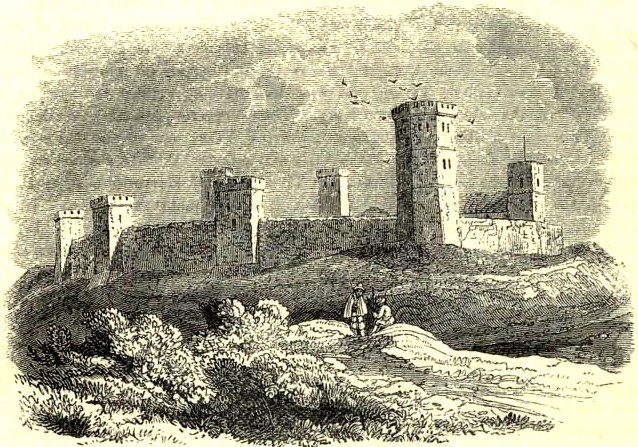
BORN at Oxford, he was ordained at Rheims, and sent on the Mission, 1583. Oxford was the chief scene of his labours, and they bore fruit in abundance. Amongst the souls he won to God was that of a noted highwayman under sentence of death in Oxford Castle. 


Through the conversation of his Catholic fellow-prisoners he became thoroughly contrite, and longed to be able to make his confession. On the very morning of his execution Father Nicols came to the jail with a crowd of other persons, and, passing for a kinsman and acquaintance of the prisoner, after mutual salutations took him aside, heard his confession, for which he had carefully prepared the night before, and gave him Absolution. The prisoner, now wonderfully comforted, declared himself a Catholic, was deaf to all the persuasions of the minister to return to Protestantism, and suffered joyfully professing the faith. Father Nicols and Father Yaxley, his companion, were sent up to London with legs tied under the horses' bellies, being insulted all along the route. An Oxford undergraduate, who from compassion attended them on their journey, was confined for some time in Bedlam as insane. The priests were sent back to Oxford, and executed July 1, 1589.

" So the last shall be first and the first last, for many are called but few chosen."—MATT. xx. 16.

Friday, July 04, 2014

+ Blessed John Cornelius, Jesuit, 1594

Also called Mohun

A MAN OF GOD

Biography

He said Mass every day at five o'clock in the morning, and never without tears. At the reading of the Passion in Holy Week again he wept exceedingly. He was sometimes in an ecstasy when praying, and was found once on his knees, his hands crossed on his breast, and his eyes raised to Heaven, so absorbed in God that it was doubtful whether he was alive or dead. He always wore a rough hair-shirt, used frequent disciplines, and for many years fasted four days a week. He gave to the poor all that came to his hands, committing the care of himself to God's providence. He preached twice a week, gave catechetical instructions for almost an hour, and read some pious lessons for about half-an-hour in the evening to those aspiring to perfection. The mortification of his senses and his recollection in God were so great that for three whole years that he lodged in a room, the windows of which looked upon the Parish Church, he had never observed it, nor did he know whether the house in which he lived was leaded or tiled. Upon several occasions his face was illuminated with a heavenly light. He suffered at Dorchester, July 4, 1594


" But thou, O man of God . . . pursue justice, godliness, faith, charity, patience, mild­ness."—1 Tim. vi. 11.

Thursday, July 03, 2014

Blessed THOMAS MAXFIELD, Priest, 1616

TYBURN IN GALA


Biography

OF an ancient Staffordshire family, he arrived in England from Douay in 1615, and was arrested in London when making his thanksgiving after Mass. On attempting his escape from the Gatehouse, Westminster, he was recaptured, thrust into a subterranean dungeon, and put in stocks, so that he could neither stand nor lie down, while helplessly attacked by swarms of venomous insects. On the fourth day he was dragged out more dead than alive and forced to walk to Newgate, where he was confined with the common felons, two of whom he converted. On the eve of his martyrdom his saintly bearing and fortitude filled with joy and veneration his Catholic visitors, and the Blessed Sacrament was exposed day and night in the Spanish Ambassador's chapel on his behalf. On July 1, the day of his execution, to draw away the crowd, a woman was burnt at Smithfield, but to no purpose. A multitude on horse and foot accompanied the martyr through the crowded streets, the Catholics, Spaniards and English, openly showing their reverence, with bare heads begging his blessing. Tyburn gallows was found to be beautifully decorated with garlands and wreaths, and the ground covered with sweet-smelling herbs and greens, and amidst these emblems of his triumph the martyr won his crown, July 1, 1616.

" As a tree planted by the running water bringing forth its fruit in due season."—Ps. i. 3.

Wednesday, July 02, 2014

+ Blessed MONFORD SCOTT, Priest, 1591

PRAYER WITHOUT CEASING

BORN in Norfolk, he arrived on the English Mission from Douay 1577. "He was a man," we are told, "of wonderful meekness and of so great abstinence that his diet on common days was bread and water, and but little more on Sundays and holidays. So addicted also was he to prayer that he often spent whole days and nights in this exercise, insomuch that his knees were grown hard by the assiduity of his devotions, as it is related of St. James


One of the bystanders perceiving this when the martyr's body was being quartered said aloud, ' I should be glad to see any one of our ministers with their knees as much hardened by constant prayer as we see this man's knees are.' And so great and so general was the veneration this holy priest had acquired that Topcliffe, the noted persecutor, loudly boasted that the Queen and kingdom were highly obliged to him for having brought to the gallows a priest so devout and mortified." Father Scott was prosecuted and condemned solely on account of his priestly character. He suffered with wonderful constancy, and no less modesty and spiritual joy, to the great edification of the spectators, and the admiration even of the greatest enemies of his faith and profession, Tyburn, July 2, 1591.

"By all prayer and supplication praying at all times in the Spirit."—EPH. vi. 18

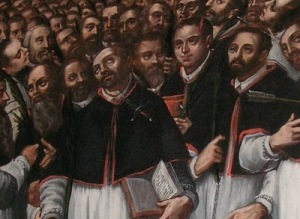
Maurice Chauncey, Prior of Sheen Angelorum

Sheen Angelorum was established following the destruction of the Charterhouse in London. "The Carthusians, along with all other subjects of the king, were required in the spring of 1534 to swear to the first Act of Succession, and thus to accept the annulment of Henry's first marriage by Cranmer and the legitimacy of Anne Boleyn's offspring. (fn. 78) Their sympathies had unquestionably lain with Queen Katherine, whose marriage they considered valid, and they had shown interest in Elizabeth Barton, although they were not so far committed with her as their brethren at Sheen. When the commissioners arrived on 4 May to tender the oath Houghton replied in the name of all that Carthusians did not meddle with the king's affairs; they asked only to be left in peace. He added that he could not see how a marriage of such long standing could be declared invalid. He was therefore conveyed to the Tower along with his procurator, Humphrey Middlemore. After deliberation there they agreed to take the oath, so far as was lawful, and were sent home, where they found the community still unwilling to swear. The commissioners, Bishop Roland Lee and Thomas Bedyll, were unsuccessful at their first visit, and at their second, on 29 May, they obtained the adhesion only of Houghton, Middlemore, and six others. Finally, Lee and Sir Thomas Kytson, one of the sheriffs of London, who brought a band of men-at-arms, were successful in extracting an oath from all. (fn. 79) So far as can be seen from Chauncy's narrative, the opposition of the monks was based on a disapproval of the Boleyn marriage rather than on a realization, such as influenced More and Fisher, that papal supremacy was at stake, for when in June 1534 commissioners endeavoured to extract an acceptance of the royal supremacy, at least nine of the community refused to take the oath, when such a refusal was not as yet criminal." Source


Three Carthusian martyrs

Tuesday, July 01, 2014

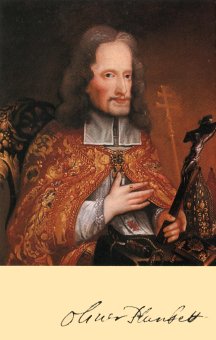
+ Archbishop OLIVER PLUNKET, 1681

THE FRUITS OF THE SPIRIT

Biography


OF a noble Irish family, he went to Rome, lived for many years with the priests of San Girolamo della Carita, and was appointed by Clement IX to the see of Armagh. There he found himself obliged to pass censures on certain scandalous livers in his flock, among them priests and religious. In revenge they took advantage of the Oates Plot to denounce the Archbishop as conspiring to raise 70,000 Irish, with the help of French troops, to destroy the Protestant religion. In his defence he said he lived in a little thatched house with one servant on 60 pounds a year and never had thought of such a design. Still with the direct evidence against him he was condemned. In Newgate his life was one of continual prayer; he fasted usually three or four days a week on bread only. His favourite devotion was sentences from Holy Scripture, the Divine Office and the Missal,and he dwelt on these under the Holy Spirit's guidance. Outwardly there appeared no sign of anguish or fear, but a sweet and holy recollection, a gentle courtesy, an unfailing cheerfulness, devoting his fitness for the sacrifice and ripeness for Heaven. His very presence kindled in men's hearts a desire to suffer for Christ.


"The fruits of the Spirit are charity, joy, peace."—GAL. V. 22.

Monday, June 30, 2014

The good old times of England!


Ere in her evil day,

From their Holy Faith and their ancient rites her people fell away;

When her gentlemen had lands to give, and her yeomen hearts to feel;

And they raised full many a bead-house, but never a bastille;

And the poor they honoured, for they knew that He, Who for us bled.

Had seldom, when He came on earth, whereon to lay His Head;

And by the poor man’s dying bed the Holy Pastor stood,

To fortify the parting soul with that celestial Food;

And in the mortal agony the Priest ye might behold,

Commending to his Father's hands a sheep of His own fold;

And when the soul was fled from earth, the Church could do yet more;

For the Chaunting Priests came slow in front, and the Cross went on before;

And o'er the poor man’s pall they bade the sacred banner wave,

To teach her sons that Holy Church hath victory o’er the grave.

But times and things are altered now:

and Englishmen begin to class the beggar with the knave, and poverty with sin :

We shut them up from tree and flower, and from the blessed sun:

We tear in twain the hearts that God in wedlock had made one,

The hearts that beat so faithfully, reposing side by side;

For fifty years of weal and woe from eve till morning tide;

No gentle Nun with her comfort sweet, no friar standeth nigh, With ghostly strength and holy love to close the poor man’s eye:

But the corpse is thrown into the ground, when the prayers are hurried o’er,

To rest in peace a little while, and then make way for more !

We mourn not for our abbey-lands ; e’en pass they as they may !

But we mourn because the tyrant found a richer spoil than they:

He cast away, as a thing defiled, the remembrance of the just;

And the relics of our martyrs he scattered to the dust:

Yet two at least, in their holy shrines, escaped the spoiler's hand,

And S. Cuthbert and S. Kdward might alone redeem a land.

And still our Litanies ascend like incense, as before;

And still we hold the one full faith Nicea taught of yore;

And still our children, duly plunged in the baptismal flood,

“Of water and the Holy Ghost, are born the sons of God ”;

And still our solemn festivals from age to age endure;

And wedded troth remains as firm, and wedded love as pure;

And many an earnest prayer ascends from many a hidden spot:

And England's Church is Catholic, though England’s self be not!

England of Saints! the hour is nigh far nigher may it

Than yet I deem, albeit that day I may not live to see,— When all thy commerce, all thy arts, and wealth, and power, and fame,

Shall melt away—at thy most need—like wax before the flame;

Then shalt thou find thy truest strength thy martyrs’ prayers always;

Then shalt thou find thy truest wealth their holy deeds of love;

And thy Church, awaking from Her sleep, come glorious forth at length,

And in sight of angels and of men display her hidden strength:

Again shall long processions sweep through Lincoln’s minster pile;

Again shall banner, cross, and cope gleam thro’ the incensed aisle :

And the faithful dead shall claim their part in the Church’s thoughtful prayer,

And the daily sacrifice to God be duly offered there;

And tierce, and nones, and matins, shall have each their holy lay ; And the Angelus at compline shall sweetly close the dav.

England of Saints! the peace will dawn- but not without the fight;

So, come the contest when it may,- and God defend thy right!

From Hierologus, or The Church Tourists, by the Rev J M Neale, DD London, James Burns, 1843.


Sunday, June 29, 2014

Venerable ROBERT SOUTHWELL, Jesuit

ST. PETER'S REMORSE

Biography


IT is a small relief
To say I was thy child,
If, as an ill-deserving foe,
From grace I am exiled.

I was, I had, I could—
All words importing want;
They are but dust of dead supplies,
Where needful helps are scant.

Once to have been in bliss
That hardly can return,
Doth but bewray from whence I fell,
And wherefore now I mourn.

All thoughts of passed hopes
Increase my present cross ;
Like ruins of decayed joys,
They still upbraid my loss.

O mild and mighty Lord !
Amend that is amiss ;
My sin, my sore, Thy love my salve,
Thy cure my comfort is.

Confirm Thy former deed,
Reform that is defiled ;
I was, I am, I will remain-
Thy charge, Thy choice, Thy child.

Life and works of Robert Southwell SJ

Feast of Saints Peter and Paul

Dowry of Mary at the Heart of the Nation :

On this feast in 1893, "the bishops of England and Wales, in response to the wishes of the Pope, consecrated England to the Mother of God and St Peter in the Oratory Church
The incumbent Archbishop of Westminster in the same place

in London. The action was a direct result of an audience with Pope Leo XIII in which he recalled that this country had long been known as Our Lady's Dowry, thereby giving papal approval to what had been a hallowed tradition and instigating an act not without significance for our own time."

Saints Peter and Paul in the Marmertine Prison.

The Mamertine Prison consists of two gloomy underground cells where Rome's vanquished enemies were imprisoned and usually died, of either starvation or strangulation. Famous prisoners here include the Goth Jugurtha, the indomitable Gaul Vercingetorix and, according to legend, St. Peter. There is no archaeological evidence or early written account that Peter was here, but the legend had taken root by the 5th century and the prison attracted early pilgrims. It remains a pilgrimage site today and a church, San Giuseppe dei Falegnami, now stands over the prison.

Saturday, June 21, 2014

+ Saint JOHN RIGBY, Layman, 1600

FETTERS UNLOOSED

Biography

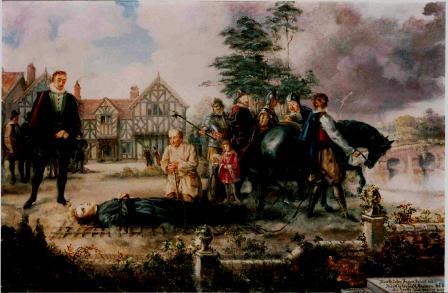
At the next assizes he again refused to go to church, and the judge ordered his feet to be put in irons. A strong pair of shackles, which the confessor kissed and blessed with the sign of the cross, were then riveted on his legs. The next day as he stood at the Sessions house the irons fell off his legs on to the ground, at which he smiled and begged the keeper to rivet them on faster. The keeper did so with all care, but again they fell. Then he called again to the keeper to make them secure : " For I esteem them," he said, "jewels too precious to be lost." But the keeper's man, being much amazed, refused to put them on again, so another was ordered to do so. Then Mr. Rigby, remembering that a Catholic maid called Mercy had that morning told him that in the night she saw in her dream his irons fall off his legs, said to his keeper, " Now the maid's dream is found to be true." He added he hoped it was a token that the bands of his mortality would shortly be loosed, and so it proved. He won his crown, June 21, 1600, St. Thomas' Waterings, London. "
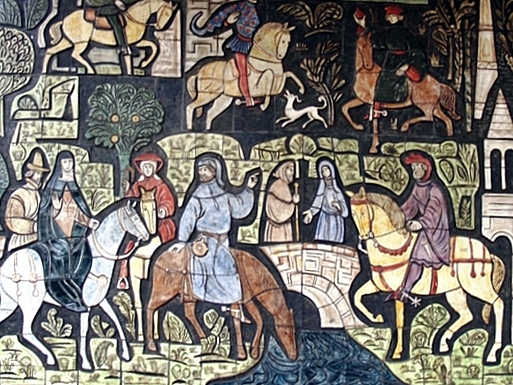
Chaucer's pilgrims at this place

"Thou hast broken my bonds : I will sacrifice to Thee a sacrifice of praise."—Ps. cxv. 16.

Tuesday, June 17, 2014

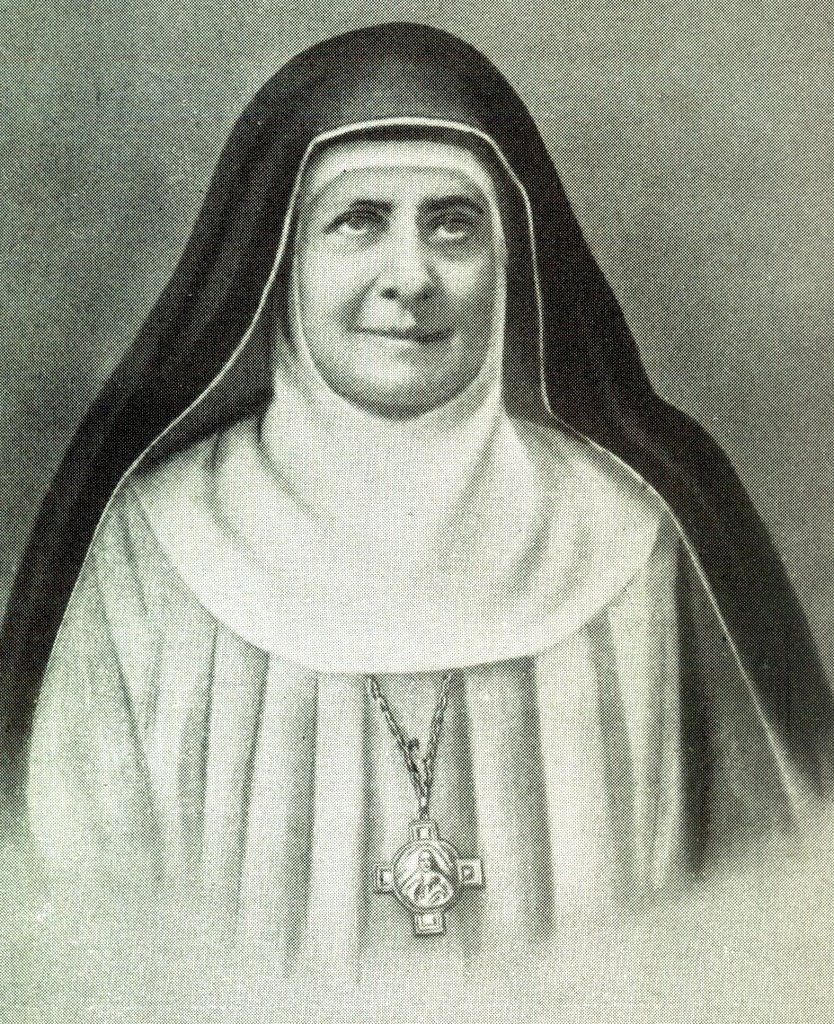
Death of Mother Marie de St Pierre, 1924


in the world, Adele Garnier, foundress of the Tyburn Convent.


Popular Posts