Visit the Bookshop


Saturday, July 05, 2014

+ Blessed GEORGE NICOLS, Priest, 1589

THE LAST FIRST

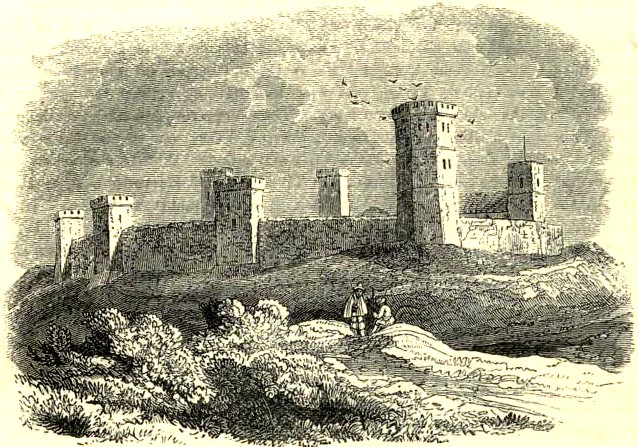
BORN at Oxford, he was ordained at Rheims, and sent on the Mission, 1583. Oxford was the chief scene of his labours, and they bore fruit in abundance. Amongst the souls he won to God was that of a noted highwayman under sentence of death in Oxford Castle. 


Through the conversation of his Catholic fellow-prisoners he became thoroughly contrite, and longed to be able to make his confession. On the very morning of his execution Father Nicols came to the jail with a crowd of other persons, and, passing for a kinsman and acquaintance of the prisoner, after mutual salutations took him aside, heard his confession, for which he had carefully prepared the night before, and gave him Absolution. The prisoner, now wonderfully comforted, declared himself a Catholic, was deaf to all the persuasions of the minister to return to Protestantism, and suffered joyfully professing the faith. Father Nicols and Father Yaxley, his companion, were sent up to London with legs tied under the horses' bellies, being insulted all along the route. An Oxford undergraduate, who from compassion attended them on their journey, was confined for some time in Bedlam as insane. The priests were sent back to Oxford, and executed July 1, 1589.

" So the last shall be first and the first last, for many are called but few chosen."—MATT. xx. 16.

Friday, July 04, 2014

+ Blessed John Cornelius, Jesuit, 1594

Also called Mohun

A MAN OF GOD

Biography

He said Mass every day at five o'clock in the morning, and never without tears. At the reading of the Passion in Holy Week again he wept exceedingly. He was sometimes in an ecstasy when praying, and was found once on his knees, his hands crossed on his breast, and his eyes raised to Heaven, so absorbed in God that it was doubtful whether he was alive or dead. He always wore a rough hair-shirt, used frequent disciplines, and for many years fasted four days a week. He gave to the poor all that came to his hands, committing the care of himself to God's providence. He preached twice a week, gave catechetical instructions for almost an hour, and read some pious lessons for about half-an-hour in the evening to those aspiring to perfection. The mortification of his senses and his recollection in God were so great that for three whole years that he lodged in a room, the windows of which looked upon the Parish Church, he had never observed it, nor did he know whether the house in which he lived was leaded or tiled. Upon several occasions his face was illuminated with a heavenly light. He suffered at Dorchester, July 4, 1594


" But thou, O man of God . . . pursue justice, godliness, faith, charity, patience, mild­ness."—1 Tim. vi. 11.

Thursday, July 03, 2014

Blessed THOMAS MAXFIELD, Priest, 1616

TYBURN IN GALA


Biography

OF an ancient Staffordshire family, he arrived in England from Douay in 1615, and was arrested in London when making his thanksgiving after Mass. On attempting his escape from the Gatehouse, Westminster, he was recaptured, thrust into a subterranean dungeon, and put in stocks, so that he could neither stand nor lie down, while helplessly attacked by swarms of venomous insects. On the fourth day he was dragged out more dead than alive and forced to walk to Newgate, where he was confined with the common felons, two of whom he converted. On the eve of his martyrdom his saintly bearing and fortitude filled with joy and veneration his Catholic visitors, and the Blessed Sacrament was exposed day and night in the Spanish Ambassador's chapel on his behalf. On July 1, the day of his execution, to draw away the crowd, a woman was burnt at Smithfield, but to no purpose. A multitude on horse and foot accompanied the martyr through the crowded streets, the Catholics, Spaniards and English, openly showing their reverence, with bare heads begging his blessing. Tyburn gallows was found to be beautifully decorated with garlands and wreaths, and the ground covered with sweet-smelling herbs and greens, and amidst these emblems of his triumph the martyr won his crown, July 1, 1616.

" As a tree planted by the running water bringing forth its fruit in due season."—Ps. i. 3.

Wednesday, July 02, 2014

+ Blessed MONFORD SCOTT, Priest, 1591

PRAYER WITHOUT CEASING

BORN in Norfolk, he arrived on the English Mission from Douay 1577. "He was a man," we are told, "of wonderful meekness and of so great abstinence that his diet on common days was bread and water, and but little more on Sundays and holidays. So addicted also was he to prayer that he often spent whole days and nights in this exercise, insomuch that his knees were grown hard by the assiduity of his devotions, as it is related of St. James. 


One of the bystanders perceiving this when the martyr's body was being quartered said aloud, ' I should be glad to see any one of our ministers with their knees as much hardened by constant prayer as we see this man's knees are.' And so great and so general was the veneration this holy priest had acquired that Topcliffe, the noted persecutor, loudly boasted that the Queen and kingdom were highly obliged to him for having brought to the gallows a priest so devout and mortified." Father Scott was prosecuted and condemned solely on account of his priestly character. He suffered with wonderful constancy, and no less modesty and spiritual joy, to the great edification of the spectators, and the admiration even of the greatest enemies of his faith and profession, Tyburn, July 2, 1591.

"By all prayer and supplication praying at all times in the Spirit."—EPH. vi. 18

Maurice Chauncey, Prior of Sheen Angelorum

Sheen Angelorum was established following the destruction of the Charterhouse in London. "The Carthusians, along with all other subjects of the king, were required in the spring of 1534 to swear to the first Act of Succession, and thus to accept the annulment of Henry's first marriage by Cranmer and the legitimacy of Anne Boleyn's offspring. (fn. 78) Their sympathies had unquestionably lain with Queen Katherine, whose marriage they considered valid, and they had shown interest in Elizabeth Barton, although they were not so far committed with her as their brethren at Sheen. When the commissioners arrived on 4 May to tender the oath Houghton replied in the name of all that Carthusians did not meddle with the king's affairs; they asked only to be left in peace. He added that he could not see how a marriage of such long standing could be declared invalid. He was therefore conveyed to the Tower along with his procurator, Humphrey Middlemore. After deliberation there they agreed to take the oath, so far as was lawful, and were sent home, where they found the community still unwilling to swear. The commissioners, Bishop Roland Lee and Thomas Bedyll, were unsuccessful at their first visit, and at their second, on 29 May, they obtained the adhesion only of Houghton, Middlemore, and six others. Finally, Lee and Sir Thomas Kytson, one of the sheriffs of London, who brought a band of men-at-arms, were successful in extracting an oath from all. (fn. 79) So far as can be seen from Chauncy's narrative, the opposition of the monks was based on a disapproval of the Boleyn marriage rather than on a realization, such as influenced More and Fisher, that papal supremacy was at stake, for when in June 1534 commissioners endeavoured to extract an acceptance of the royal supremacy, at least nine of the community refused to take the oath, when such a refusal was not as yet criminal." Source


Three Carthusian martyrs

Tuesday, July 01, 2014

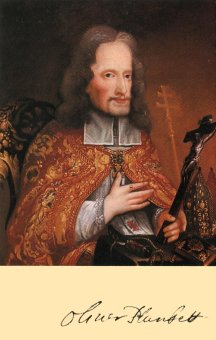
+ Archbishop OLIVER PLUNKET, 1681

THE FRUITS OF THE SPIRIT

Biography


OF a noble Irish family, he went to Rome, lived for many years with the priests of San Girolamo della Carita, and was appointed by Clement IX to the see of Armagh. There he found himself obliged to pass censures on certain scandalous livers in his flock, among them priests and religious. In revenge they took advantage of the Oates Plot to denounce the Archbishop as conspiring to raise 70,000 Irish, with the help of French troops, to destroy the Protestant religion. In his defence he said he lived in a little thatched house with one servant on 60 pounds a year and never had thought of such a design. Still with the direct evidence against him he was condemned. In Newgate his life was one of continual prayer; he fasted usually three or four days a week on bread only. His favourite devotion was sentences from Holy Scripture, the Divine Office and the Missal,and he dwelt on these under the Holy Spirit's guidance. Outwardly there appeared no sign of anguish or fear, but a sweet and holy recollection, a gentle courtesy, an unfailing cheerfulness, devoting his fitness for the sacrifice and ripeness for Heaven. His very presence kindled in men's hearts a desire to suffer for Christ.


"The fruits of the Spirit are charity, joy, peace."—GAL. V. 22.

Monday, June 30, 2014

The good old times of England!


Ere in her evil day,

From their Holy Faith and their ancient rites her people fell away;

When her gentlemen had lands to give, and her yeomen hearts to feel;

And they raised full many a bead-house, but never a bastille;

And the poor they honoured, for they knew that He, Who for us bled.

Had seldom, when He came on earth, whereon to lay His Head;

And by the poor man’s dying bed the Holy Pastor stood,

To fortify the parting soul with that celestial Food;

And in the mortal agony the Priest ye might behold,

Commending to his Father's hands a sheep of His own fold;

And when the soul was fled from earth, the Church could do yet more;

For the Chaunting Priests came slow in front, and the Cross went on before;

And o'er the poor man’s pall they bade the sacred banner wave,

To teach her sons that Holy Church hath victory o’er the grave.

But times and things are altered now:

and Englishmen begin to class the beggar with the knave, and poverty with sin :

We shut them up from tree and flower, and from the blessed sun:

We tear in twain the hearts that God in wedlock had made one,

The hearts that beat so faithfully, reposing side by side;

For fifty years of weal and woe from eve till morning tide;

No gentle Nun with her comfort sweet, no friar standeth nigh, With ghostly strength and holy love to close the poor man’s eye:

But the corpse is thrown into the ground, when the prayers are hurried o’er,

To rest in peace a little while, and then make way for more !

We mourn not for our abbey-lands ; e’en pass they as they may !

But we mourn because the tyrant found a richer spoil than they:

He cast away, as a thing defiled, the remembrance of the just;

And the relics of our martyrs he scattered to the dust:

Yet two at least, in their holy shrines, escaped the spoiler's hand,

And S. Cuthbert and S. Kdward might alone redeem a land.

And still our Litanies ascend like incense, as before;

And still we hold the one full faith Nicea taught of yore;

And still our children, duly plunged in the baptismal flood,

“Of water and the Holy Ghost, are born the sons of God ”;

And still our solemn festivals from age to age endure;

And wedded troth remains as firm, and wedded love as pure;

And many an earnest prayer ascends from many a hidden spot:

And England's Church is Catholic, though England’s self be not!

England of Saints! the hour is nigh far nigher may it

Than yet I deem, albeit that day I may not live to see,— When all thy commerce, all thy arts, and wealth, and power, and fame,

Shall melt away—at thy most need—like wax before the flame;

Then shalt thou find thy truest strength thy martyrs’ prayers always;

Then shalt thou find thy truest wealth their holy deeds of love;

And thy Church, awaking from Her sleep, come glorious forth at length,

And in sight of angels and of men display her hidden strength:

Again shall long processions sweep through Lincoln’s minster pile;

Again shall banner, cross, and cope gleam thro’ the incensed aisle :

And the faithful dead shall claim their part in the Church’s thoughtful prayer,

And the daily sacrifice to God be duly offered there;

And tierce, and nones, and matins, shall have each their holy lay ; And the Angelus at compline shall sweetly close the dav.

England of Saints! the peace will dawn- but not without the fight;

So, come the contest when it may,- and God defend thy right!

From Hierologus, or The Church Tourists, by the Rev J M Neale, DD London, James Burns, 1843.


Sunday, June 29, 2014

Venerable ROBERT SOUTHWELL, Jesuit

ST. PETER'S REMORSE

Biography


IT is a small relief
To say I was thy child,
If, as an ill-deserving foe,
From grace I am exiled.

I was, I had, I could—
All words importing want;
They are but dust of dead supplies,
Where needful helps are scant.

Once to have been in bliss
That hardly can return,
Doth but bewray from whence I fell,
And wherefore now I mourn.

All thoughts of passed hopes
Increase my present cross ;
Like ruins of decayed joys,
They still upbraid my loss.

O mild and mighty Lord !
Amend that is amiss ;
My sin, my sore, Thy love my salve,
Thy cure my comfort is.

Confirm Thy former deed,
Reform that is defiled ;
I was, I am, I will remain-
Thy charge, Thy choice, Thy child.

Life and works of Robert Southwell SJ

Feast of Saints Peter and Paul

Dowry of Mary at the Heart of the Nation :

On this feast in 1893, "the bishops of England and Wales, in response to the wishes of the Pope, consecrated England to the Mother of God and St Peter in the Oratory Church
The incumbent Archbishop of Westminster in the same place

in London. The action was a direct result of an audience with Pope Leo XIII in which he recalled that this country had long been known as Our Lady's Dowry, thereby giving papal approval to what had been a hallowed tradition and instigating an act not without significance for our own time."

Saints Peter and Paul in the Marmertine Prison.

The Mamertine Prison consists of two gloomy underground cells where Rome's vanquished enemies were imprisoned and usually died, of either starvation or strangulation. Famous prisoners here include the Goth Jugurtha, the indomitable Gaul Vercingetorix and, according to legend, St. Peter. There is no archaeological evidence or early written account that Peter was here, but the legend had taken root by the 5th century and the prison attracted early pilgrims. It remains a pilgrimage site today and a church, San Giuseppe dei Falegnami, now stands over the prison.

Saturday, June 21, 2014

+ Saint JOHN RIGBY, Layman, 1600

FETTERS UNLOOSED

Biography

At the next assizes he again refused to go to church, and the judge ordered his feet to be put in irons. A strong pair of shackles, which the confessor kissed and blessed with the sign of the cross, were then riveted on his legs. The next day as he stood at the Sessions house the irons fell off his legs on to the ground, at which he smiled and begged the keeper to rivet them on faster. The keeper did so with all care, but again they fell. Then he called again to the keeper to make them secure : " For I esteem them," he said, "jewels too precious to be lost." But the keeper's man, being much amazed, refused to put them on again, so another was ordered to do so. Then Mr. Rigby, remembering that a Catholic maid called Mercy had that morning told him that in the night she saw in her dream his irons fall off his legs, said to his keeper, " Now the maid's dream is found to be true." He added he hoped it was a token that the bands of his mortality would shortly be loosed, and so it proved. He won his crown, June 21, 1600, St. Thomas' Waterings, London. "
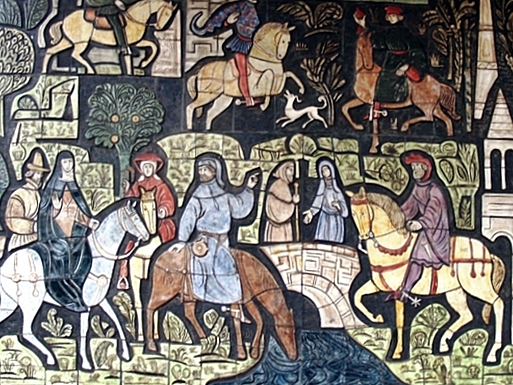
Chaucer's pilgrims at this place

"Thou hast broken my bonds : I will sacrifice to Thee a sacrifice of praise."—Ps. cxv. 16.

Tuesday, June 17, 2014

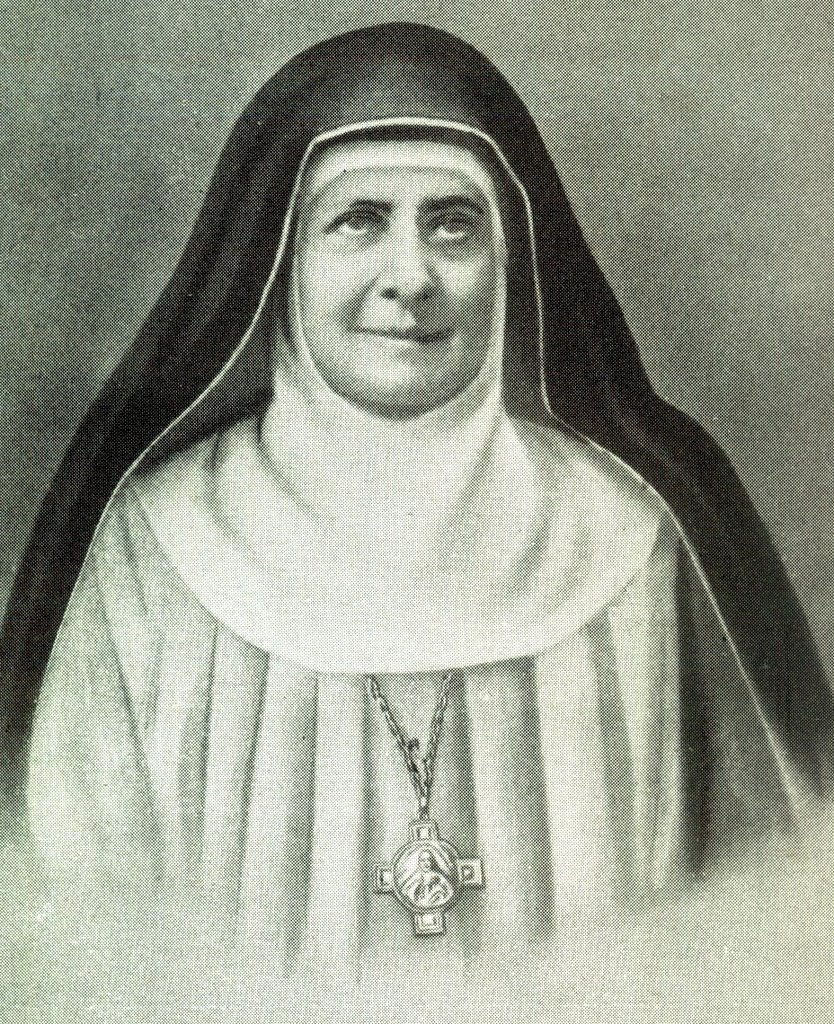
Death of Mother Marie de St Pierre, 1924


in the world, Adele Garnier, foundress of the Tyburn Convent.


Tuesday, May 27, 2014

Feast of St PHILIP NERI


Salvete Flores Martyrum- All Hail Ye Infant Martyr Flowers. St Philip Neri greets in the street the students of the English College in Rome with this phrase.

Monday, May 19, 2014

The Anniversary of the Canonisation of Saints Thomas More and John Fisher

falls today

"In honour of the Undivided Trinity, for the exaltation of the Catholic Faith and the increase of the Christian religion, by the authority of Our Lord Jesus Christ, of the Holy Apostles Peter and Paul, and our own, after mature deliberation and imploring the divine assistance, by the advice of our Venerable Brethen the Cardinals of the Holy Roman Church, the Patriarchs, Archbishops and Bishops present in the city, We decree and define as Saints, and inscribe in the Catalogue of the Saints, Blessed John Fisher and Thomas More, and that their memory shall be celebrated in the Universal Church on the anniversaries of their heavenly birth."


Wednesday, May 07, 2014

The Trial and Execution of Sir Thomas More

Foras much as, my Lords, this Indictment is grounded upon an Act of Parliament, directly repugnant ,to the Laws of God and his Holy Church, the Supreme Government of which, or of any part thereof, no Temporal Person may by any Law presume to take upon him, being what right belongs to the See of Rome, which by special Prerogative was granted by the Mouth of our Savior Christ himself to St. Peter, and the Bishops of Rome his Successors only, whilst he lived, and was personally present here on Earth: it is therefore, amongst Catholic Christians, insufficient in Law, to charge any Christian to obey it. And in order to the proof of his Assertion, he declared among other things, that whereas this Kingdom alone being but one Member, and a small part of the Church, was not to make a particular Law disagreeing with the general Law of Christ's universal Catholic Church, no more than the City of London, being but one Member in respect to the whole Kingdom, might enact a Law against an Act of Parliament, to be binding to the whole Realm: so he shewed farther, That Law was ,even contrary to the Laws and Statutes of the Kingdom yet unrepealed, as might evidently be seen by Magna Charta, wherein are these Words; Ecclesia Anglicana libera sit, & habet omnia jura integra, & libertates suas illcesas: And it is contrary also to that sacred Oath which the King's Majesty himself, and every other Christian Prince, always take with great Solemnity, at their Coronations. So great was Sir Thomas's Zeal, that he further alleged, that it was worse in the Kingdom of England to rest1se Obedience to the See of Rome, than for any Child to do to his natural Parent: for, as St. Paul said to the Corinthians, I have regenerated you, my Children, in Christ; so might that worthy Pope of Rome, St. Gregory the Great, say of us Englishmen, Ye are my Children, because I have given you everlasting Salvation: for by St. Augustine and his followers, his immediate Messengers, England first received the Christian faith, which is a far higher and better Inheritance than any carnal Sather can leave to his Children; for a. Son is only by generation, we are by Regeneration made the spiritual Children of Christ and the Pope."

Margaret Roper, his daughter, rescues St Thomas More's head after his execution.

Sunday, May 04, 2014

Feast of the Forty Martyrs in the modern calendar


Approval of the feastday

In England, these martyrs are commemorated in the traditional calendar within the Catholic Church by a feast day on 25 October, which is also the feast of Saints Crispin and Crispinian, but after the Second Vatican Council they are also now celebrated together with all the 284 canonized or beatified martyrs of the English Reformation on 4 May. In Wales, the Catholic Church keeps 25 October as the feast of the 'Six Welsh Martyrs and their companions'. The Welsh Martyrs are the priests Philip Evans and John Lloyd, John Jones, David Lewis, John Roberts, and the teacher Richard Gwyn, Wales continues to keep 4 May as a separate feast for the beatified martyrs of England and Wales.

Traditionally in England, May 4 has been kept as the Feast of the Crown of Thorns, Festum susceptionis coronae Domini 

Saturday, May 03, 2014

John Henry Newman in 1854

comes to pray at the tomb of Blessed Dominic Barberi where he was then buried at Aston Hall. Dominic himself predicted that there would be priests forever in residence at Aston. He cannot have expected the present use.

ASTON HALL
by V. REV. CANON ARTHUR G. WALL

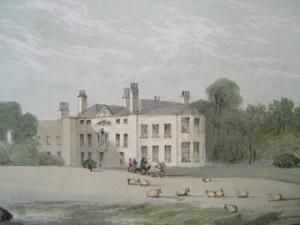
Aston Hall is situated in Aston, a village two miles south of Stone and about six miles north of Stafford.
The Hall contains bed-sitting rooms for eight priests who dine in community or in their own rooms if indisposed. There is an automatic lift to the bed-sitting rooms.
The Hall was purchased from Major Wenger in 1961 by Cyril Hartley, K.S.G., who gave it to the Birmingham Archdiocese as a guest house for retired and convalescent priests. Also, priests are welcome who wish to spend a little time and quietness in pleasant country surroundings. The Hall has a large garden, spacious grounds, and a field, altogether about six acres.
The Hall is served by a community of Sisters of Charity of St. Paul, whose head convent is at Selly Park, Birmingham. The Sisters are trained to serve the old and sick.

There is a very charming chapel in the Hall, near the main entrance, which is part of the Passionist Church erected by Blessed Dominic Barberi C.P.

The Hall is partly surrounded by a wide and deep moat (now dry). This gives some indication of the life of Aston Hall.

One of the glories of Aston is that with a few exceptions in recent times, it was always the home of good Catholic families. Old families like the Stanleys, Heveneninghams, Simeons and Welds were possessors. Early in the 19th Century there was a community of Franciscans, followed by Brigittine Nuns.

Father Benjamin Hulme was in charge of the Aston parish and lived in the Hall 1838-1842. Shortly after his arrival he was cleaning the Chapel when under the altar he found the lost relics of St. Chad. These relics are now the glory of St. Chads Cathedral, Birmingham.
In 1842 Father Dominic Barberi C.P. came to the Hall, and lived there until his death in 1849. The Passionist Fathers stayed on for some years and finally went to Sutton, near Preston, taking with them the body of Blessed Dominic.

After the departure of the Passionists the Aston parish was served by seculars. Father Huddleston (later Canon) was appointed Parish priest. He pulled down the old Hall and built the present one, finishing it in 1855. Canon Huddleston died in 1871. In 1909 the Hall was sold to non-Catholics and remained in non-Catholic hands until Major Wenger bought it.
Now it is a delightful home for retired and convalescent priests.

Many people have in recent years visited the Hall. Pilgrims come to see the hallowed spot where Blessed Dominic lived. Parish parties, desiring to see again their old Parish priest, come and are always welcome.

Priests and sick living in the Hall appreciate the good care and kindnesses of the Sisters in charge and find a great joy in living in a place hallowed by our grand old Catholic forefathers who kept the faith for us.

Wednesday, April 23, 2014

Novena in honour of Saint George


Pray the following prayers for nine consecutive days:

PREPARATORY PRAYER

Almighty and eternal God!
With lively faith
and reverently worshipping
Thy divine Majesty,
I prostrate myself before Thee
and invoke with filial trust
Thy supreme bounty and mercy.
Illumine the darkness of my intellect
with a ray of Thy heavenly light
and inflame my heart
with the fire of Thy Divine love,
that I may contemplate
the great virtues and merits
of the Saint in whose honour
I make this novena,
and following his example imitate,
like him,
the life of Thy Divine Son.

Moreover, I beseech Thee to grant graciously,
through the merits and intercession
of this powerful Helper,
the petition which through him
I humbly place before Thee,
devoutly saving,
"Thy will be done on earth as it is in heaven."
Vouchsafe graciously to hear it,
if it redounds to Thy greater glory
and to the salvation of my soul.

Amen.

PRAYER IN HONOR OF SAINT GEORGE

O GOD, who didst grant to Saint George
strength and constancy in the various torments
which he sustained for our holy faith;
we beseech Thee to preserve,
through his intercession,
our faith from wavering and doubt,
so that we may serve Thee
with a sincere heart faithfully unto death.
Through Christ our Lord.

Amen.

INVOCATION OF SAINT GEORGE

Faithful servant of God
and invincible martyr, Saint George;
favoured by God with the gift of faith,
and inflamed with an ardent love of Christ,
thou didst fight valiantly
against the dragon of pride,
falsehood, and deceit.
Neither pain nor torture,
sword nor death could part thee
from the love of Christ.
I fervently implore thee
for the sake of this love
to help me by thy intercession
to overcome the temptations that surround me,
and to bear bravely
the trials that oppress me,
so that I may patiently carry the cross
which is placed upon me;
and let neither distress nor difficulties
separate me from the love of Our Lord Jesus Christ.
Valiant champion of the Faith,
assist me in the combat against evil,
that I may win the crown promised to them
that persevere unto the end.

PRAYER

My Lord and my God!
I offer up to Thee
my petition in union
with the bitter passion
and death of Jesus Christ, Thy Son,
together with the merits
of His immaculate and blessed Mother,
Mary ever virgin,
and of all the saints,
particularly with those of the holy Helper
in whose honour I make this novena.

Look down upon me,
merciful Lord!
Grant me Thy grace and Thy love,
and graciously hear my prayer.

Amen.


Tuesday, April 15, 2014

A CRY FOR RELIEF in 1600, Part the Second

by Squire William Blundell

6.

In time to come, as heretofore,
Most certainlye shee shall prevayle
'Gainst all the force and sleightie wyles,
Whearwith hellgates may her assayle;
Whoe shoote against this brazen valle
With their fond boultes themselves will gaule.

7.

Themselves to gaule they vil be sure
Whoe stryve to ruinate thy howse,
And to withdrawe thy children deare
From saufte lappe of thy dearest spouse,
Thy children whom, with streames of bloode,
Thou bought, sweet Lorde, upon the Roode.

8.

Upon the Rood thou bought our soules
With pryce more worthe then all thou bought,
Yett doth the fëëde [fiend] our foes so biynde
Both soules and pryce they sett at nought;
They reaken not anoughe their ill
Except with theirs our soules they spill.

9.

Our soules to spille they think full soone,
Or els our bodies to inthralle ;
Or, at the-least, to wantful state,
Through hard pursuits, to bring us all;
Come quicklie, therefore, Lord Jesus,
And judge this cause twixt them and us.

10.

Geeve judgment, Lord, twixt them and _us,
The ballance yett let pittie houlde
Let mercie,measure their offence, , _ i
And grace reduce them to thy foul de,-
That wee, all children of thy spouse,
May live as brethren in thy house.


Monday, April 14, 2014

A CRY FOR RELIEF in 1600

by William Blundell of Crosby Hall


I.

We Catholicks tormented sore
With heresies fowl railinge tonge,
With prisons, tortures, loss of geodes,
Of lande, yea lyves, even thieves amonge
Do crave with harte surcharged with grieffe
Of thee, sweet Jesu, some relieffe.

2.

We crave relieffe in this distresse,
We seeke some ease of this annoye,
Yett are wee well content with all,
So thee in end wee may enjoye ;
Ourselves to thee wee do resygne,
Relieve us, Lord, our cause is thyne.

3.

Our cause is thyne, and thyne are wee,
Who from thy trueth refuse to slyde
Our faithe thy trueth, true faith the cause
For which these garboyles wee abyde,
True faith, I say, as plaine appears
To all whoe shutt not eyes and ears.

4.

To all whoe shutt not eyes and ears
'Gainst fathers, scriptures, Church and thee,
Whoe built thy Church as Doctors all
With scriptures playnlie doe agree,
Not soone to falle upon the sande,
But on a Rocke stille sure to stande.

5.

Still sure to stande, yea, on a hille,
For all her friends and foes to see,
Her friends to foster and defend,
Her foes to vanquish gloriousíie,
From age to age this hath shee done,
Thus shall shee do in time to come.


Prayer for the Conversion of England


"With full confidence we call upon these (Our Lady, St Peter and St George) to be our pleaders before the throne of God that receiving the joy of ancient days, it may fill you with all joy and peace in believing" Apostolic Letter of Pope Leo XIII to the English People, 14 April 1895."

The following prayer was also indulgenced on the same occasion.

O Blessed Virgin Mary, Mother of God, and our own most gentle Queen and Mother, look down in mercy upon England, thy Dowry, and upon us all who greatly hope and trust in thee. Through thee it was that Jesus our Saviour and our Hope was given unto the world; and he hath given thee to us that we might hope still more. Plead for us thy children, whom thou didst receive and accept at the foot of the Cross, O sorrowful Mother. Intercede for our separated English brethren, that they may be united with us in the one true Fold. Pray for us all, dear Mother, that by faith fruitful in good works, we may all deserve to see and praise God together with thee in our heavenly home. Amen.

Ad sanctissimom Virginem pro Anglis fratribus precatio. O beata Virgo Maria, Mater Dei, Regina nostra et Mater dulcissima bcnigna oculos tuos convcrto ad Angliam, quae “Dos” tua vocatur; a convorto ad nos, qui magna in te fiducia confidimus. Per te datus est Christus Salvator mundi, in quo spes nostra consisterct; ab Ipso autem tu data es nobis, per quam spes eadem augeretur. Eia igitur, ora pro nobis, quos tibi apud crucem Domini excepisti filios, o perdolens Mater: intercede pro fratribus dissidentibus, ut nobiscum in unico vero Ovili adjungantur summo Pastori, Vicario in terris Filii tui. Pro nobis omnibus depreccare, o Mater piissima, ut per fidem, bonis operibus fecundam, mercamur tecum omnes contemplari Deum in coelesti patria et collaudare per secula. Amen.

Pope Leo XIII (300 days indulgence, plenary indulgence once a day for Catholics who pray the prayer each day, with the usual conditions of sacramental Confession,Communion at Mass and prayer for the intentions of the Pope).

Ignatius Spencer, Passionist, Crusader of Prayer for England

Popular Posts